In continuation of my update on dexamethasone
Wednesday, August 24, 2016
One-dose of dexamethasone can improve outcomes of asthmatic patients in ER
In continuation of my update on dexamethasone
Thursday, August 13, 2015
Dexamethasone May Help Prevent Severe Kidney Injury Following Heart Surgery
Wednesday, July 1, 2026
Synthetic stress hormone dexamethasone could reduce certain breast cancer metastases
Wednesday, June 8, 2016
Plitidepsin in combination with dexamethasone shows top-line results in Phase III multiple myeloma trial
Monday, September 4, 2017
Study shows three-drug combination delays recurrence and lengthens life for myeloma patients
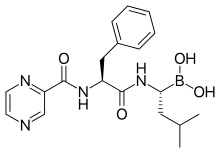
"Our results are clear. Using bortezomib in combination with lenalidomide and dexamethasone in front-line treatment - hitting the disease early and hard - makes a meaningful difference for myeloma patients," said study principal investigator Dr. Durie, a physician at Cedars-Sinai Outpatient Cancer Center in Los Angeles. "Our results represent a potential new standard of care."
Friday, November 11, 2016
Phase I study of triple drug combination shows promise in multiple myeloma patients
Tuesday, January 22, 2019
FDA Approves Dextenza (dexamethasone ophthalmic insert) for the Treatment of Ocular Pain Following Ophthalmic Surgery
“We are extremely pleased to announce the approval of Dextenza, coming so soon after our pre-approval inspection and approximately one month ahead of the PDUFA date,” said Antony Mattessich, the Company’s President and Chief Executive Officer. “Just over a year ago, we set out to augment our scientific and formulation expertise with individuals who have the skills and experience to create a first-class team to get Dextenza approved and become a commercial stage biopharmaceutical company. We believe this approval is a major external validation of the drug delivery technology platform, and also of the transformation that has taken place at Ocular. While we are excited by the approval of our first drug product, our goal has always been to bring Dextenza to as many patients as possible in the near term and to revolutionize ophthalmic drug delivery by making drops obsolete. We now turn our efforts towards the successful commercial launch of Dextenza.”
“Compliance with taking eye drops after eye surgery is very challenging for patients and a concern for surgeons,” said Michael Goldstein, MD, Chief Medical Officer. “The approval of Dextenza offers surgeons the opportunity to treat patients with a preservative-free steroid after surgery with the placement of a single drug insert. With this product, patients may be liberated from having to deal with the burdensome regimen of using steroid eye drops after ophthalmic surgery.”
Monday, November 23, 2026
FDA Grants Accelerated Approval to Zenbexus (iberdomide) in Combination with Daratumumab and Hyaluronidase-fihj and Dexamethasone for the Treatment of Multiple Myeloma
In continuation of my update on iberdomide
Bristol Myers Squibb (NYSE: BMY) announced the U.S. Food and Drug Administration (FDA) approval of Zenbexus (iberdomide) in combination with daratumumab and hyaluronidase-fihj and dexamethasone (ZDd) for the treatment of adult patients with multiple myeloma who have received at least one prior line of therapy including a proteasome inhibitor and an immunomodulatory agent.1 Full approval for this indication will be contingent upon verification and description of clinical benefit in the confirmatory trial(s). Zenbexus is the first FDA-approved CELMoD, belonging to a new class called cereblon-modulating protein degraders for the treatment of multiple myeloma.1 Please see the Important Safety Information section below, including Boxed WARNINGS for Zenbexus regarding embryo-fetal toxicity and venous and arterial thromboembolism. Zenbexus is contraindicated in females who are pregnant.
- Approval based on EXCALIBER-RRMM results showing ZDd doubled minimal residual disease-negative complete response rates versus daratumumab, bortezomib and dexamethasone (41% vs. 21%) in relapsed or refractory multiple myeloma(1)
- Zenbexus marks the arrival of a new treatment class, representing the next chapter in Bristol Myers Squibb’s targeted protein degradation platform
“Today’s approval of Zenbexus represents meaningful progress for patients living with multiple myeloma and underscores the power of our targeted protein degradation platform, particularly our CELMoD programs,” said Cristian Massacesi, MD, chief medical officer and head of development at Bristol Myers Squibb. “As the first approved CELMoD, Zenbexus marks the arrival of a new treatment class and is an important milestone in our efforts to expand what is possible for patients with multiple myeloma. And we believe this is only the beginning. This approval validates years of scientific research and strengthens our confidence in the potential of this approach as we continue to advance our innovative pipeline on behalf of patients with significant unmet needs.”
Approval of Zenbexus is based on results from the Phase 3 EXCALIBER-RRMM trial evaluating Zenbexus, daratumumab and hyaluronidase-fihj and dexamethasone (ZDd; n=207) compared to daratumumab, bortezomib and dexamethasone (DVd; n=213) in patients with RRMM.1 At a median follow-up of 16 months, results showed treatment with ZDd demonstrated a statistically significant improvement in one of the dual primary endpoints of minimal residual disease (MRD)-negative complete response (CR) in 41% of patients (n=85; 95% CI: 34-48) vs. 21% of patients (n=44; 95% CI: 15-27) treated with DVd (p < 0.0001).1 MRD-negativity is among the deepest measures of response in multiple myeloma and is considered predictive of improved progression-free survival (PFS).2 This FDA decision marks the first approval in relapsed or refractory multiple myeloma based on MRD-negative CR.
“The FDA approval of iberdomide marks the anticipated arrival of a new therapeutic class for relapsed or refractory multiple myeloma and has the potential to make a meaningful difference for patients,” said Sagar Lonial, MD, FACP, FASCO, EXCALIBER-RRMM lead investigator and chief medical officer of the Winship Cancer Institute of Emory University. “The strong results observed with the CELMoD-based combination within a familiar triplet approach creates the potential for a new treatment foundation in multiple myeloma.”
The combination of ZDd was observed to have a safety profile that is expected of the combination, with 7.8% of patients discontinuing ZDd due to adverse reactions.1 Among the key safety findings, ZDd can cause serious, life-threatening, or fatal infections and severe neutropenia.1 Neutropenia and infections in patients who received ZDd occurred at a rate of 90.2% and 78.9%, respectively, leading to few discontinuations (1% and 1.5%, respectively).1 The most common adverse reactions (≥20%) in the ZDd arm and DVd arm, respectively, were upper respiratory tract infection (54% and 52%), fatigue (36% and 33%), musculoskeletal pain (35% and 33%), pneumonia (34% and 17%), diarrhea (33% and 36%), motor dysfunction (26% and 17%), rash (26% and 15%), sleep disorder (25% and 28%), hypogammaglobulinemia (24% and 12%), COVID-19 (23% and 16%), and constipation (20% and 22%).1 Serious adverse reactions in ≥2% of patients included pneumonia (26%), upper respiratory tract infection (6.4%), second primary malignancy (5.9%), neutropenia (4.9%), febrile neutropenia (3.9%), COVID-19 (4.4%), and sepsis (2.9%).1 Fatal adverse reactions occurred in 10 patients (4.9%) who received Zenbexus.1 Sepsis (1.5%) was the only fatal drug reaction that occurred in more than 1 patient.1 The following fatal adverse reactions occurred in 1 patient each: listeria encephalitis, influenza, lung adenocarcinoma, cardiac arrest, large intestine perforation, metabolic acidosis, and respiratory failure.1
“The goal for every person living with multiple myeloma is not simply to live longer, but to live well,” said Heather Cooper Ortner, president and chief executive officer of the International Myeloma Foundation. “That is why it is important to have access to effective therapeutic options, particularly in the community setting where the majority of myeloma care is delivered. This approval represents an important step forward by expanding treatment options for patients facing their first relapse. Every new option gives patients and their healthcare teams additional choices as treatment needs evolve, as well as renewed hope for the future.”
Zenbexus was granted Breakthrough Therapy designation and accelerated approval based on MRD-negative CR at any time in the EXCALIBER-RRMM study.1 This review was conducted under the FDA’s Project Orbis initiative, which enables concurrent review by the health authorities in several other countries.
While Zenbexus is the first FDA approved CELMoD therapy, a New Drug Application for mezigdomide, an investigational CELMoD, in combination with carfilzomib and dexamethasone is also currently under review with the FDA with a Prescription Drug User Fee Act target date of May 13, 2027.
Bristol Myers Squibb offers various programs and resources to address the needs of patients and caregivers, and provides support that allows for access to therapies, including Zenbexus.
Monday, January 19, 2015
Three-drug combination produces better results in multiple myeloma patients
Tuesday, October 1, 2019
Ocular Therapeutix Announces FDA Approval of Dextenza (dexamethasone intracanalicular insert) for the Treatment of Ocular Inflammation Following Ophthalmic Surgery
“We could not be more excited about both the approval and its earlier-than-expected timing,” said Antony Mattessich, the Company’s President and Chief Executive Officer. “With our C-Code and pass-through payment status effective on July 1, the expanded indication gives us tremendous momentum as we approach our commercial launch.”
Thursday, December 7, 2017
Tesaro Announces U.S. FDA Approval of Varubi IV for Delayed Nausea and Vomiting Associated With Cancer Chemotherapy
About Varubi
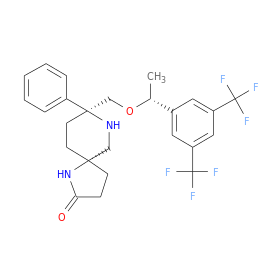
“The approval of Varubi IV represents a significant milestone for TESARO. The majority of NK-1 receptor antagonist doses are administered intravenously in the U.S., and with the introduction of Varubi IV, we now offer healthcare providers a unique, easy-to-use option that fits well into standard operating practices of a chemotherapy clinic or hospital,” said Mary Lynne Hedley, Ph.D., President and COO of TESARO. “We will continue our efforts to expand awareness of delayed chemotherapy-induced nausea and vomiting, and plan to make this important medicine available next month.”
“Many healthcare providers tend to believe that CINV is no longer an unmet need but the reality is that more than half of patients treated with emetogenic chemotherapy experience delayed CINV, even when prescribed standard preventative therapies, such as a 5-HT3 receptor antagonist and dexamethasone,” said Lee Schwartzberg, M.D., Professor of Medicine at University of Tennessee Health Science Center. “The FDA approval of VARUBI IV gives doctors and nurses a new option to help protect their patients from these often preventable side effects.”
Thursday, May 2, 2019
Karyopharm Announces FDA Extension of Review Period for Selinexor New Drug Application
About Selinexor
Wednesday, February 10, 2016
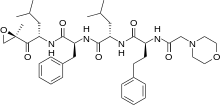
Role for carfilzomib in relapsed, refractory multiple myeloma treatment
Thursday, November 13, 2014
FDA Approves Revised Indication for Ozurdex for the Treatment of Diabetic Macular Edema
Thursday, December 14, 2017
Tesaro Announces U.S. FDA Approval of Varubi IV for Delayed Nausea and Vomiting Associated With Cancer Chemotherapy

About Varubi
“The approval of Varubi IV represents a significant milestone for TESARO. The majority of NK-1 receptor antagonist doses are administered intravenously in the U.S., and with the introduction of Varubi IV, we now offer healthcare providers a unique, easy-to-use option that fits well into standard operating practices of a chemotherapy clinic or hospital,” said Mary Lynne Hedley, Ph.D., President and COO of TESARO. “We will continue our efforts to expand awareness of delayed chemotherapy-induced nausea and vomiting, and plan to make this important medicine available next month.”
“Many healthcare providers tend to believe that CINV is no longer an unmet need but the reality is that more than half of patients treated with emetogenic chemotherapy experience delayed CINV, even when prescribed standard preventative therapies, such as a 5-HT3 receptor antagonist and dexamethasone,” said Lee Schwartzberg, M.D., Professor of Medicine at University of Tennessee Health Science Center. “The FDA approval of VARUBI IV gives doctors and nurses a new option to help protect their patients from these often preventable side effects.”
Friday, October 10, 2014
Phase III trial: Rolapitant lessens chemotherapy-induced nausea and vomiting
Saturday, March 30, 2013
Japanese P2 study shows potential of combined vaccine and steroid drug in castration resistant PCa
Tuesday, July 30, 2013
Phase III study: REVLIMID meets primary endpoint in patients newly diagnosed with multiple myeloma
Sunday, January 5, 2020
FDA Approves Xpovio (selinexor) for the Treatment of Patients with Relapsed or Refractory Multiple Myeloma
“With today’s accelerated approval of Xpovio by the FDA, patients with heavily pretreated multiple myeloma will now have a new therapeutic option to treat their disease,” said Sharon Shacham, PhD, MBA, Founder, President and Chief Scientific Officer of Karyopharm. “Discovering, developing and securing FDA approval for XPOVIO with its novel mechanism of action over the past decade required the dedication of many people, including the patients, caregivers and physicians involved in our clinical trials, along with the many employees at Karyopharm. We are tremendously grateful for everyone’s contributions to this important milestone, and we look forward to the next stage in our pursuit of improving the lives of patients with cancer.”
“Despite recent advances in the treatment of multiple myeloma, almost all our patients will develop disease that is resistant to the five most commonly used anti-myeloma drugs we currently have available, and the prognosis for this patient population is particularly poor. The accelerated approval of oral Xpovio marks an important advance in the treatment paradigm for patients with relapsed refractory multiple myeloma, and in my view, is an important addition to our therapeutic armamentarium,” said Dr. Paul Richardson, MD, Clinical Program Leader and Director of Clinical Research, Jerome Lipper Multiple Myeloma Center at the Dana-Farber Cancer Institute.