Showing posts with label on. Show all posts

Friday, October 9, 2026

FDA Proposes to Exclude Semaglutide, Tirzepatide, and Liraglutide on 503B Bulks List.

The U.S. Food and Drug Administration announced the  proposal  to exclude semaglutide, tirzepatide, and liraglutide on the 503B bulks list, finding no clinical need for outsourcing facilities to compound these drugs from bulk substances. 


The 503B bulks list identifies bulk drug substances that outsourcing facilities may use in compounding under the conditions of section 503B of the Federal Food, Drug, and Cosmetic Act (FD&C Act). In most cases, outsourcing facilities cannot compound drugs using bulk drug substances unless the substance appears on the 503B bulks list, or the compounded drug is on the FDA’s drug shortage list at the time of compounding, distribution, and dispensing. 

After evaluating the nominations for these three substances, the FDA did not identify a clinical need for outsourcing facilities to compound semaglutide, tirzepatide, and liraglutide from bulk drug substances. 

“When FDA-approved drugs are available, outsourcing facilities cannot lawfully compound using bulk drug substances unless there is a clear clinical need,” said FDA Commissioner Marty Makary, M.D., M.P.H. “This action reflects our responsibility to protect patients and preserve the integrity of the drug approval process while continuing to provide a transparent, science-based pathway for public input.”

The FDA carefully reviewed the nominations it received and did not identify sufficient evidence to include semaglutide, tirzepatide and liraglutide on the 503B bulks list. A determination of clinical need is based on patient safety and medical necessity under the law. 

The FDA is now inviting interested parties to submit comments electronically through the docket by June 29, 2026. The agency will consider submitted comments before making a final determination. 

https://en.wikipedia.org/wiki/Liraglutide
https://en.wikipedia.org/wiki/Tirzepatide
https://en.wikipedia.org/wiki/Semaglutide

More : 

Wednesday, September 23, 2026

New drug combination doubles down on Alzheimer's treatments

A new study finds that combining the current medications for Alzheimer’s disease with small molecules derived from micronutrients found in grapes, berries, peanuts and turmeric is a safer and more effective way to treat the disease.

Individuals with Alzheimer’s have a buildup of toxic amyloid proteins in the brain. Researchers from the School of Pharmacy at the University of Waterloo combined amyloid-destroying small molecules with anti-amyloid antibodies that are already used in Alzheimer’s treatment. They found that it neutralized the clumping of proteins that accumulate in the brain, leading to better outcomes.

Alzheimer’s is the major cause of dementia. Dementia affects nearly 750,000 people in Canada, with a million cases expected by 2030. Alzheimer’s has no cure and current medications only relieve a patient’s symptoms. Anti-amyloid antibody therapies on their own can slow the disease, but they also come with risks that can be fatal, including brain swelling and bleeding.

“We already know the small molecules resveratrol or curcumin, which are found in some common foods, block the buildup of amyloid,” said Dr. Praveen Nekkar Rao, a professor in the School of Pharmacy at Waterloo. “What’s new and exciting is our combination of these molecules with the anti-amyloid antibodies. This approach could allow clinicians to use lower doses of antibodies, potentially reducing the risk of serious treatment-related side effects.”

Since there are few effective treatments for Alzheimer’s, researchers at Waterloo studied whether using two treatments together could work better than using just one. They chose resveratrol and curcumin because they are natural compounds known to reduce amyloid buildup and inflammation.

curcumin

Resveratrol


“I was inspired by chemotherapy, which involves taking multiple medications for effective treatment,” Nekkar Rao said. “Alzheimer’s is a complex disease, but there are very few combination therapy approaches. Our results show that the way forward is definitely combination therapy.”

The researchers emphasize that the study does not suggest that people should start consuming resveratrol or curcumin to prevent or treat dementia. You would have to consume an unsafe amount in order to reach the brain. The next phase of the research will focus on designing next-generation drugs that can reach the brain more effectively, interact favourably with amyloids and pair seamlessly with antibody treatments.


https://en.wikipedia.org/wiki/Curcumin
https://en.wikipedia.org/wiki/Resveratrol


Tuesday, March 23, 2021

Chinese scientists ask for patent on US drug to fight virus

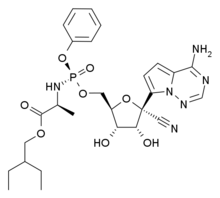
In continuation of my update on Remdesivir

Scientists in the city at the center of China's virus outbreak have applied to patent a drug made by U.S. company Gilead Sciences Inc. to treat the disease, possibly fueling conflict over technology policy that helped trigger Washington's tariff war with Beijing.
GS-5734 structure.png

The government-run Wuhan Institute of Virology said this week it applied for the patent in January along with a military laboratory. An institute statement acknowledged there are "intellectual property barriers" but said it acted to "protect national interests."
Granting its own scientists a patent might give the Chinese government leverage in negotiations over paying for the drug. But it also might fuel complaints Beijing abuses its regulatory system to pressure foreign companies to hand over valuable technology.
On Thursday, the official Xinhua News Agency said clinical trials of the drug, remdesivir, were due to start.
Gilead, headquartered in Foster City, California, said it applied in 2016 for a Chinese patent on use of remdesivir against coronaviruses and is waiting for a decision. The coronavirus family includes the novel coronavirus, or 2019-nCoV, blamed for the outbreak in Wuhan.
"Gilead has no influence over whether a patent office issues a patent to the Chinese researchers," said a company spokesman, Ryan McKeel. "Their application has been filed more than three years after Gilead's filing and will be considered in view of what is already known about the compound and pending patent applications."
The institute said its application was filed Jan. 21. Two days later, Chinese authorities suspended most access to Wuhan, a city of 11 million people. That lockdown has expanded to surrounding cities and some in other provinces, isolating a total of about 60 million people in the most sweeping anti-disease measures ever imposed.
China has the right under World Trade Organization rules to declare an emergency and compel a company to license a patent to protect the public. It would be required to pay a license fee that is deemed fair market value.
The government might be able to avoid that fee if the patent were granted to the Wuhan institute, part of the elite Chinese Academy of Sciences.
The institute said it applied for a "use patent" that specifies the Wuhan virus as the drug's target. Gilead's patent application, filed before the virus was identified, cites only the overall family of coronaviruses.
The Chinese researchers made their patent application "from the perspective of protecting national interests," said the institute statement.
"If relevant foreign companies plan to contribute to China's epidemic prevention and control, we both agree that if the state needs it, we will not require enforcement of rights given by the patent," it said.
Gillead said last week it was working with U.S. and Chinese health authorities on studying remdesivir. The company said it has provided the drug for emergency use in a small number of patients with the Wuhan virus "in the absence of any approved treatment options."
https://www.bloomberg.com/news/articles/2020-02-03/gilead-drug-to-undergo-human-trials-in-china-to-cure-coronavirus
https://www.med-chemist.com/search?q=remdesivir