Showing posts sorted by date for query ritonavir. Sort by relevance Show all posts

Wednesday, September 30, 2026

Ensitrelvir cuts household COVID-19 risk when given after exposure


Ensitrelvir COVID-19 Prevention Background

The coronavirus disease 2019 (COVID-19) pandemic caused millions of deaths worldwide. Although its acute phase has waned, it continues to cause illness and death, especially in high-risk groups. This is partly due to its high mutation rate, waning immunity, and high household transmission rates of 32%-48%.

Since the use of masks and social distancing measures is not enough to completely prevent transmission, there is a need for effective preventive drugs, at least for those at increased risk. Earlier trials of nirmatrelvir-ritonavir and molnupiravir did not show significant protection against COVID-19 in exposed household contacts.

Ensitrelvir showed potent in vitro activity against multiple SARS-CoV-2 variants, including omicron. It is approved in Japan for the treatment of mild-to-moderate COVID-19 in patients aged 12 years or older. Currently, it has been approved in Japan for post-exposure prophylaxis in contacts aged 12 years or older, based on the findings of this study.

In the phase 3 SCORPIO-SR trial, it reduced COVID-19 symptoms when initiated within 72 hours of symptom onset. The phase 3 SCORPIO-HR trial demonstrated the drug's antiviral efficacy but failed to show a significant difference in time to symptom resolution.

This motivated the current phase 3 SCORPIO-PEP trial. It was conducted as a double-blind randomized controlled trial involving 2387 randomized household contacts, of whom 2041 were included in the modified intention-to-treat population. The mean age of the population was 42.4 years.

SCORPIO-PEP Trial Study Design

At baseline, all participants had a history of contact with someone with COVID-19, the index patient. All had nasopharyngeal swabs submitted on days 1, 3, 6, 10, 15, 21, and 28 for reverse transcriptase-polymerase chain reaction (RT-PCR) detection of SARS-CoV-2.

Those who were test-negative and asymptomatic at baseline were randomly assigned to receive either ensitrelvir (1,030 participants) or placebo (1,011 participants) for 5 days beginning within 72 hours after symptom onset in the index patient. The primary endpoint was symptomatic RT-PCR-confirmed COVID-19 by day 10.

This required symptomatic RT-PCR positivity within ten days of trial-drug or placebo administration. This included the appearance of one or more symptoms from a panel of 14, lasting at least 48 hours, or worsening in the case of preexisting symptoms.

Approximately 71% of participants were randomized within 48 hours of the index patient's onset of symptoms. About 37% had one or more risk factors for severe COVID-19, including obesity, smoking, and age above 65 years. Nearly 19% of index patients received antiviral therapy, mostly with ensitrelvir. Approximately 85% or more of those in each group completed the regimen.

Over 98% had antibodies to the SARS-CoV-2 nucleocapsid or spike antigens.

COVID-19 Prevention Efficacy Findings

Compared with the ensitrelvir group, the placebo group had a significantly higher rate of new COVID-19 cases (9% vs. 2.9%). The risk ratio in favor of the ensitrelvir group was 0.33, indicating a 67% reduction in relative risk in ensitrelvir recipients post-exposure, compared to placebo.

The observed reduction appears larger than reported in previous household contact PEP studies. However, comparisons of efficacy across trials should be interpreted cautiously in light of differences between trials, definitions of illness, and shorter time limits for delineating primary infection rates. Notably, these differences persisted even when adjusting for differences in the definition of COVID-19.

By day 2, the placebo group showed a rapid rise in symptomatic infections, which was both smaller and spread out over 12 days in the ensitrelvir group. The benefit appeared to be generally consistent across participants with and without risk factors, although subgroup analyses were not adjusted for multiplicity. Across the participating countries, COVID-19 incidence among household contacts was lower in the US than in Japan.

In this study, the drug maintained plasma concentrations above the estimated target concentration, compared to estimates derived from nonclinical studies. This might indicate the persistence of effective prophylaxis beyond the five-day regimen.

Viral Load and Safety Findings

RT-PCR-confirmed SARS-CoV-2 infection rates were also lower with ensitrelvir than with placebo. Among participants with baseline-positive RT-PCR, viral loads were lower, as were those among those who developed infection or symptomatic COVID-19 while on ensitrelvir.

Adverse events were similar in both groups, and neither group reported hospitalizations or deaths from COVID-19. Ensitrelvir was associated with reversible reductions in HDL cholesterol, and its use requires attention to potential drug-drug interactions because it is a moderately strong CYP3A inhibitor.

The researchers did not have data on other measures used to limit household transmission or on the difference in outcomes due to antiviral administration, which is common in Japan and was offered to 38% of patients versus 6% in the US. The risk of selecting for viral mutations associated with resistance following ensitrelvir administration could not be completely excluded due to missing viral sample data from index patients treated with ensitrelvir. Participants using contraindicated medications were also excluded, which may limit real-world generalizability in patients at risk of CYP3A-mediated drug interactions.

Ensitrelvir Post-Exposure Prophylaxis Implications

The findings suggest that when administered within 72 hours of symptom onset in a COVID-19 index patient, ensitrelvir effectively prevented symptomatic illness in household contacts and reduced the relative risk of the illness up to day 10 by 67% among participants who received at least one dose of the drug. Among high-risk participants, about 2.4% of those who received ensitrelvir developed COVID-19, compared with 10% in the placebo group.

https://en.wikipedia.org/wiki/Ensitrelvir


Tuesday, January 28, 2020

AbbVie's HIV Drug Aluvia (Lopinavir/ritonavir) Seen as Potential Treatment for Coronavirus


In continuation of my update on Lopinavir/Fritonavior
 Lopinavir and ritonavir.svg
More than 80 people have died from the coronavirus in China. The Chinese government is turning to a drug developed by AbbVie for HIV patients as a potential treatment for the outbreak that has reached the shores of the United States.
AbbVie said it was donating more than one million dollars’ worth of Aluvia, a combination of lopinavir and ritonavir as an ad-hoc treatment for pneumonia that is associated with the outbreak. The Chinese government suggested last week that taking two lopinavir/ritonavir pills and inhaling a dose of nebulized alpha-interferon twice a day could benefit these patients, Reuters reported. There are more than 2,000 known cases of the coronavirus in China. The illness has caused parts of China to grind to a halt as health officials seek to contain the spread of the virus.
The decision to use AbbVie’s medicine came after a noted respiratory expert at Peking University First Hospital in Beijing said he was given the HIV drugs to fight the virus after he contracted it following a visit to Wuhan, the capital of Hubei province in central China where the virus is thought to have originated. Wan Guangfa came down with the virus after interacting with coronavirus patients. He told China News Week that the HIV treatments worked for him.
The coronavirus family includes the common cold as well as viruses that cause more serious illnesses, such as SARS that spread from China to more than a dozen countries in 2002-03 and killed about 800 people. Also, the virus is similar to Middle Eastern Respiratory Syndrome (MERS), which developed from camels. The virus infects the lungs, and symptoms start with a fever and cough. It can progress to shortness of breath and breathing difficulties leading to pneumonia.
Aluvia is thought to be a potential treatment for the coronavirus due to its ability to block a protease that the virus needs to replicate within the human body. AbbVie’s drug has previously been tested in patients with SARS and MERS, which are similar viruses, Endpoints reported.
Other drugmakers are also responding. Gilead Sciences is looking at its Ebola virus drug remdesivir, an antiviral, as a potential coronavirus treatment, The Motley Fool reported. Moderna also has a treatment for the virus under investigation. The company received a grant from the Coalition for Epidemic Preparedness Innovations to investigate a treatment for the virus. Inovio also received a grant from CEPI to develop a potential vaccine.
https://en.wikipedia.org/wiki/Lopinavir/ritonavir

Tuesday, May 2, 2017

AbbVie Receives U.S. FDA Approval of Once-Daily Viekira XR (dasabuvir, ombitasvir, paritaprevir and ritonavir) for the Treatment of Genotype 1 Chronic Hepatitis C


In continuation of my update on Dasabuvir,  ombitasvir, paritaprevir and ritonavir
 AbbVie (NYSE: ABBV), a global biopharmaceutical company, today announced that the U.S. Food and Drug Administration (FDA) has approved a New Drug Application (NDA) for Viekira XR (dasabuvir, ombitasvir, paritaprevir and ritonavir) extended-release tablets. Viekira XR is a once-daily, extended-release co-formulation of the active ingredients in Viekira Pak (ombitasvir, paritaprevir, and ritonavir tablets; dasabuvir tablets) and is for the treatment of patients with chronic genotype 1 (GT1) hepatitis C virus (HCV) infection, including those with compensated cirrhosis (Child-Pugh A). Viekira XR is not for people with decompensated cirrhosis.
Dasabuvir.svg dasabuvir  Ombitasvir.svg  ombitasvir

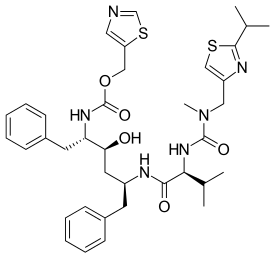
Paritaprevir structure 2.svgParitaprevir  Ritonavir structure.svgritonavir


Viekira XR is the first co-formulated three direct-acting antiviral (DAA) treatment for adult patients with GT1 HCV. Viekira XR is given once-daily as three oral tablets and must be taken with a meal. It is used without ribavirin (RBV) in GT1b patients and in combination with twice daily RBV in GT1a patients. The approval is supported by Phase 3 clinical trials for Viekira Pak which include data that demonstrated 100 percent sustained virologic response 12 weeks following treatment (SVR12) in GT1b patients with 12 weeks of therapy without ribavirin and 95 percent SVR12 in GT1a patients when used with ribavirin for 12 or 24 weeks of therapy.
"AbbVie's work continues to contribute to the transformation of hepatitis C care through our focus on evolving our current therapies as part of our ongoing commitment to patients," said Rob Scott, M.D., vice president, development and chief medical officer, AbbVie. "The approval of Viekira XR provides a new treatment option for genotype 1 hepatitis C patients in the U.S. with clinical trial data using the components of Viekira XR demonstrating 100 percent cure rates in genotype 1b patients."
There are six major HCV genotypes (GT1-6) and GT1 is the most prevalent form of HCV in the U.S., accounting for approximately 74 percent of all cases.1 Hepatitis C continues to be an important public health issue, with the Centers for Disease Control and Prevention (CDC) estimating that in the U.S. approximately 2.7 million people are chronically infected with HCV.2
The approval of Viekira XR is supported by data from seven Phase 3 clinical trials in more than 2,300 patients who received Viekira Pak with or without RBV for 12 or 24 weeks and two bioavailability studies comparing the formulations.

About Clinical Studies

The components of Viekira XR (administered twice daily with a meal) have been studied in seven Phase 3 clinical trials where 1076 subjects (including 181 with compensated cirrhosis) received the recommended regimen of Viekira +/? RBV for 12 weeks, or for 24 weeks in GT1a patients with compensated cirrhosis. Ninety-five to 100 percent achieved SVR12, which means the hepatitis C virus is not detectable in the blood three months after treatment ends. Cure rates varied by the subtype of hepatitis C and whether or not the person had cirrhosis. Individual results may vary.
USE
Viekira XR (dasabuvir, ombitasvir, paritaprevir, and ritonavir) extended-release tablets/Viekira Pak (ombitasvir, paritaprevir, and ritonavir tablets; dasabuvir tablets) (Viekira) are prescription medicines used with or without ribavirin to treat adults with genotype 1 chronic (lasting a long time) hepatitis C (hep C) virus infection.
Viekira can be used in people who have compensated cirrhosis.
Viekira is not for people with advanced cirrhosis (decompensated). If people have cirrhosis, they should talk to a doctor before taking Viekira.

About Viekira XR

The components of Viekira XR* have been studied in a broad range of genotype 1 (GT1) patients with chronic hepatitis C virus (HCV) infection, ranging from treatment-naïve to difficult to treat patients, such as those with compensated (mild, Child-Pugh A) cirrhosis of the liver, HCV/HIV-1 co-infection, liver transplant recipients with normal hepatic function and mild fibrosis, and those who have failed previous treatment with pegylated interferon (pegIFN) and ribavirin (RBV).
The extended-release co-formulation of these components, Viekira XR, consists of 200 mg of dasabuvir, 8.33 mg of ombitasvir, 50 mg of paritaprevir, and 33.33 mg of ritonavir per tablet, and is dosed three tablets once daily. Viekira XR must be taken with a meal, and tablets should be swallowed whole. People should not drink alcohol within four hours of taking Viekira XR. Viekira XR is contraindicated in patients with moderate to severe hepatic impairment (Child-Pugh B and C) due to risk of potential toxicity. Viekira XR is taken for 12 weeks, except in GT1a patients with cirrhosis and all liver transplant recipients with normal hepatic function and mild fibrosis, who should take it for 24 weeks. Ribavirin should be co-administered in GT1a patients and in all patients who have received a liver transplant.
Paritaprevir was discovered during the ongoing collaboration between AbbVie and Enanta Pharmaceuticals (NASDAQ: ENTA) for HCV protease inhibitors and regimens that include protease inhibitors. Paritaprevir is used in combination with AbbVie's ombitasvir with or without dasabuvir for the treatment of hepatitis C.
*Given as a fixed-dose combination of ombitasvir 25mg (an NS5A inhibitor), paritaprevir 150mg (an NS3/4A protease inhibitor), and ritonavir 100mg (an HIV-1 protease inhibitor), dosed once daily with a meal, and dasabuvir 250mg (a non-nucleoside NS5B palm polymerase inhibitor), dosed twice daily with a meal.

Wednesday, July 13, 2016

VIEKIRAX and EXVIERA achieve high SVR rates in GT1 and GT4 hepatitis C virus infected patients


Ombitasvir.svg
ombitasvir

Paritaprevir structure 2.svg
paritaprevir
Ritonavir structure.svg
ritonavir 

Dasabuvir.svg
dasabuvir 

Ribavirin.svg

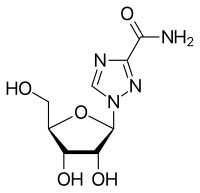
ribavirin (RBV).


AbbVie, a global biopharmaceutical company,    announced new real-world data showing 96 percent of genotype 1 (GT1) patients (n=486/505 assessable for analysis) and 100 percent (n=53/53) of genotype 4 (GT4) patients achieved sustained virologic response at 12 weeks post-treatment (SVR12). These data support results seen in Phase 3 clinical trials for chronic GT1 or GT4 hepatitis C virus (HCV) infected patients treated with VIEKIRAX® (ombitasvir/paritaprevir/ritonavir tablets) and EXVIERA® (dasabuvir tablets) with or without ribavirin (RBV).

The analysis also reports safety outcomes from 1,017 people with GT1 or GT4 chronic HCV enrolled in the German Hepatitis C-Registry (DHC-R) who have initiated treatment, representing a diverse group of patients seen in real-world settings being treated with VIEKIRAX and EXVIERA. The results will be presented orally today at The International Liver Congress™ (ILC) 2016 in Barcelona, Spain.

“Real-world studies complement randomized controlled trials and help to further enhance our knowledge of VIEKIRAX and EXVIERA in everyday clinical practice,” said Heiner Wedemeyer, M.D., research group leader, department of gastroenterology, hepatology and endocrinology at Hannover Medical School in Germany. “The effectiveness and safety results shown across a broad cross-section of patients in this particular study provide helpful insight into treatment of real-world patients.”

The safety study population (n=1,017) was reflective of a diversity of patients seen in routine clinical practice, including patients with cirrhosis (22 percent) and those previously treated for HCV (59 percent). More than half of patients (59 percent) were taking medicines for other medical conditions.

“These results provide additional insights that complement the Phase 3 clinical trial data for VIEKIRAX and EXVIERA,” said Rob Scott, M.D., vice president, development and chief medical officer, AbbVie. “We believe further ongoing real-world studies across multiple countries will enrich our understanding of HCV treatment.”

Among the patients included in the safety analysis (n=1,017), the rate of discontinuation due to adverse events (AEs) was low (1.5 percent).1 The most common AEs (≥ 5 percent) were fatigue (24 percent), pruritus (10 percent), headache (9 percent), insomnia (6 percent) and nausea (5 percent). Serious AEs were reported in 1 percent (n=5/480) of patients receiving VIEKIRAX and EXVIERA without RBV and in 3 percent (n=16/537) of patients receiving VIEKIRAX and EXVIERA with RBV. Fifteen patients discontinued treatment due to AEs, while two patients died due to myocardial infarction or stroke, respectively. Both cases were assessed as not related to study treatment.


VIEKIRAX and EXVIERA achieve high SVR rates in GT1 and GT4 hepatitis C virus infected patients: AbbVie, a global biopharmaceutical company, today announced new real-world data showing 96 percent of genotype 1 (GT1) patients (n=486/505 assessable for analysis) and 100 percent (n=53/53) of genotype 4 (GT4) patients achieved sustained virologic response at 12 weeks post-treatment (SVR12).

Tuesday, January 12, 2016

New drug combination may reduce need for complex regimens to treat hepatitis C

In continuation of my update on sofosbuvir


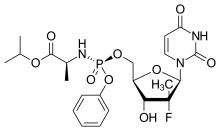
Ledipasvir.svg  Sofosbuvir structure.svg
The prognosis for people with hepatitis C has improved dramatically in the last few years, thanks to the introduction of direct-acting anti-viral medications, including Harvoni (the brand name for a combination of ledipasvir and sofosbuvir) and Viekira Pack (a mix of ombitasvir, paritaprevir, ritonavir and dasabuvir). These drugs — which block the hepatitis C virus from multiplying — boast cure rates of better than 90 percent. In addition, they are well-tolerated in most patients, causing only minor side effects.

Despite these major advances, the quest for better hepatitis C medications is not yet over. Drug makers continue to test new drugs to overcome limitations in treating this virus, which can cause liver cirrhosis (or scarring) and failure. About 2.7 million people in the U.S. are infected with the virus, with nearly 30,000 cases occurring in 2013 alone, according to the Centers for Disease Control and Prevention.

"The current medicines are very effective, but physicians sometimes have to tailor the regimen or the length of treatment based on patient characteristics, such as whether the patient has liver cirrhosis or has failed prior therapy," says Nancy S. Reau, MD, chief of the Section of Hepatology at Rush University Medical Center.

Another treatment factor is the type of hepatitis C a patient has. The virus has six different strains, called genotypes.

Now a simplified way of treating all hepatitis C patients may be approaching. Reau participated in a phase III clinical trial of a combination of Solvadi (sofosbuvir) with the investigational drug velpatasvir on patients with genotypes two and three. As described in an article published online on Nov. 17 in the New England Journal of Medicine, the study found that 12 weeks of sofosbuvir-velpatasvir produced higher cure rates in patients with these two genotypes — including those who had cirrhosis or had failed older treatments — than a similar therapy (sofosbuvir-ribavirin)

Wednesday, September 23, 2015

Tentative FDA approval of lopinavir/ritonavir oral pellet formulation closes treatment gap for children with HIV

The Paediatric HIV Treatment Initiative welcomes this important step towards closing the treatment gap for children with HIV

Infants and young children living with HIV will finally have access to an improved formulation of an antiretroviral (ARV) treatment, following the U.S. Food and Drug Administration's (FDA) tentative approval last week of lopinavir/ritonavir (LPV/r) oral pellets developed by the Indian generic company Cipla.

Lopinavir.svg(lopinavir)  Ritonavir.svg(ritonavir)

"The announcement of tentative FDA approval of the lopinavir/ritonavir oral pellet formulation is an important step forward in increasing access to World Health Organization-recommended antiretroviral treatment for children under three years of age," said Ambassador Deborah L. Birx, M.D., U.S. Global AIDS Coordinator and U.S. Special Representative for Global Health Diplomacy. "This supports the goals of key PEPFAR initiatives to improve paediatric HIV/AIDS services, including the Accelerating Children's HIV/AIDS Treatment Initiative and the Global Pediatric ARV Commitment to Action".

Until now, the only available version of this combination treatment was a harsh-tasting syrup that required refrigeration and contained 40% alcohol. Only a quarter of children with HIV are currently on treatment and the lack of child-adapted formulations contributes to this unacceptable situation.
"UNITAID and its partners in the Paediatric HIV Treatment Initiative (PHTI)* also welcome the approval of these oral pellets, which brings us a step nearer to closing the shameful treatment gap for the 3.2 million children living with HIV around the world," said Lelio Marmora, Executive Director of UNITAID which is funding the development of paediatric formulations for HIV.

Importantly, intellectual property issues around access to future LPV/r combinations will be reduced, thanks to a licensing agreement the Medicine Patent Pool (MPP) signed in in December 2014 with AbbVie, the patent holder for LPV/r. "This is a crucial licence for paediatric programmes as it benefits low- and middle-income countries where 99% of children with HIV in the developing world live," said Greg Perry, Executive Director of the MPP.

Wednesday, October 1, 2014

FDA Approves Tybost (cobicistat) for use in the treatment of HIV-1 Infection

We know that, Cobicistat (formerly GS-9350) is a licensed drug for use in the treatment of infection with the human immunodeficiency virus (HIV).


Like ritonavir (Norvir), cobicistat is of interest for its ability to inhibit liver enzymes that metabolize other medications used to treat HIV, notably elvitegravir, an HIV integrase inhibitor. By combining cobicistat with elvitegravir, higher concentrations of the latter are achieved in the body with lower dosing, theoretically enhancing elvitegravir's viral suppression while diminishing its adverse side-effects. In contrast with ritonavir, the only other booster approved for use as a part of HAART, cobicistat has no anti-HIV activity of its own.. 
 Now U.S. Food and Drug Administration (FDA) has approved Tybost (cobicistat), a CYP3A inhibitor used in combination with atazanavir or darunavir for the treatment of human immunodeficiency virus type 1 (HIV-1) infection..