Showing posts with label risk. Show all posts

Wednesday, September 30, 2026

Ensitrelvir cuts household COVID-19 risk when given after exposure


Ensitrelvir COVID-19 Prevention Background

The coronavirus disease 2019 (COVID-19) pandemic caused millions of deaths worldwide. Although its acute phase has waned, it continues to cause illness and death, especially in high-risk groups. This is partly due to its high mutation rate, waning immunity, and high household transmission rates of 32%-48%.

Since the use of masks and social distancing measures is not enough to completely prevent transmission, there is a need for effective preventive drugs, at least for those at increased risk. Earlier trials of nirmatrelvir-ritonavir and molnupiravir did not show significant protection against COVID-19 in exposed household contacts.

Ensitrelvir showed potent in vitro activity against multiple SARS-CoV-2 variants, including omicron. It is approved in Japan for the treatment of mild-to-moderate COVID-19 in patients aged 12 years or older. Currently, it has been approved in Japan for post-exposure prophylaxis in contacts aged 12 years or older, based on the findings of this study.

In the phase 3 SCORPIO-SR trial, it reduced COVID-19 symptoms when initiated within 72 hours of symptom onset. The phase 3 SCORPIO-HR trial demonstrated the drug's antiviral efficacy but failed to show a significant difference in time to symptom resolution.

This motivated the current phase 3 SCORPIO-PEP trial. It was conducted as a double-blind randomized controlled trial involving 2387 randomized household contacts, of whom 2041 were included in the modified intention-to-treat population. The mean age of the population was 42.4 years.

SCORPIO-PEP Trial Study Design

At baseline, all participants had a history of contact with someone with COVID-19, the index patient. All had nasopharyngeal swabs submitted on days 1, 3, 6, 10, 15, 21, and 28 for reverse transcriptase-polymerase chain reaction (RT-PCR) detection of SARS-CoV-2.

Those who were test-negative and asymptomatic at baseline were randomly assigned to receive either ensitrelvir (1,030 participants) or placebo (1,011 participants) for 5 days beginning within 72 hours after symptom onset in the index patient. The primary endpoint was symptomatic RT-PCR-confirmed COVID-19 by day 10.

This required symptomatic RT-PCR positivity within ten days of trial-drug or placebo administration. This included the appearance of one or more symptoms from a panel of 14, lasting at least 48 hours, or worsening in the case of preexisting symptoms.

Approximately 71% of participants were randomized within 48 hours of the index patient's onset of symptoms. About 37% had one or more risk factors for severe COVID-19, including obesity, smoking, and age above 65 years. Nearly 19% of index patients received antiviral therapy, mostly with ensitrelvir. Approximately 85% or more of those in each group completed the regimen.

Over 98% had antibodies to the SARS-CoV-2 nucleocapsid or spike antigens.

COVID-19 Prevention Efficacy Findings

Compared with the ensitrelvir group, the placebo group had a significantly higher rate of new COVID-19 cases (9% vs. 2.9%). The risk ratio in favor of the ensitrelvir group was 0.33, indicating a 67% reduction in relative risk in ensitrelvir recipients post-exposure, compared to placebo.

The observed reduction appears larger than reported in previous household contact PEP studies. However, comparisons of efficacy across trials should be interpreted cautiously in light of differences between trials, definitions of illness, and shorter time limits for delineating primary infection rates. Notably, these differences persisted even when adjusting for differences in the definition of COVID-19.

By day 2, the placebo group showed a rapid rise in symptomatic infections, which was both smaller and spread out over 12 days in the ensitrelvir group. The benefit appeared to be generally consistent across participants with and without risk factors, although subgroup analyses were not adjusted for multiplicity. Across the participating countries, COVID-19 incidence among household contacts was lower in the US than in Japan.

In this study, the drug maintained plasma concentrations above the estimated target concentration, compared to estimates derived from nonclinical studies. This might indicate the persistence of effective prophylaxis beyond the five-day regimen.

Viral Load and Safety Findings

RT-PCR-confirmed SARS-CoV-2 infection rates were also lower with ensitrelvir than with placebo. Among participants with baseline-positive RT-PCR, viral loads were lower, as were those among those who developed infection or symptomatic COVID-19 while on ensitrelvir.

Adverse events were similar in both groups, and neither group reported hospitalizations or deaths from COVID-19. Ensitrelvir was associated with reversible reductions in HDL cholesterol, and its use requires attention to potential drug-drug interactions because it is a moderately strong CYP3A inhibitor.

The researchers did not have data on other measures used to limit household transmission or on the difference in outcomes due to antiviral administration, which is common in Japan and was offered to 38% of patients versus 6% in the US. The risk of selecting for viral mutations associated with resistance following ensitrelvir administration could not be completely excluded due to missing viral sample data from index patients treated with ensitrelvir. Participants using contraindicated medications were also excluded, which may limit real-world generalizability in patients at risk of CYP3A-mediated drug interactions.

Ensitrelvir Post-Exposure Prophylaxis Implications

The findings suggest that when administered within 72 hours of symptom onset in a COVID-19 index patient, ensitrelvir effectively prevented symptomatic illness in household contacts and reduced the relative risk of the illness up to day 10 by 67% among participants who received at least one dose of the drug. Among high-risk participants, about 2.4% of those who received ensitrelvir developed COVID-19, compared with 10% in the placebo group.

https://en.wikipedia.org/wiki/Ensitrelvir


Thursday, July 24, 2025

FDA Approves Zusduri (mitomycin) for Recurrent Low-Grade Intermediate-Risk Non-Muscle Invasive Bladder Cancer

UroGen Pharma Ltd. announced the U.S. Food and Drug Administration (FDA) approval of  Zusduri, the first and only FDA-approved medication for adults with recurrent LG-IR-NMIBC. Zusduri consists of mitomycin and sterile hydrogel, using UroGen’s proprietary sustained release RTGel® technology. Zusduri has been designed for potent tumor ablation. This landmark approval is based on the positive results from the Phase 3 ENVISION trial that demonstrated Zusduri delivers 78% complete response (CR) for patients at 3 months, and of those patients 79% remained event-free 12 months later.


“The approval of Zusduri represents a significant step forward for our company and for the treatment of recurrent LG-IR-NMIBC," said Liz Barrett, President and CEO of UroGen. "For the first time, the estimated 59,000 U.S. patients facing recurrent LG-IR-NMIBC each year have access to an FDA-approved medicine. This historic achievement is a bold leap forward in our mission to redefine uro-oncology and bring innovation to patients who need it most. We are deeply grateful to the FDA for their collaboration and to the investigators, patients, and caregivers whose commitment made this milestone possible. Their contributions have been essential in bringing meaningful innovation to the bladder cancer community.”

The existing standard of care for LG-IR-NMIBC is a surgical procedure typically performed under general anesthesia called transurethral resection of bladder tumor (TURBT). Due to high recurrence rates of LG-IR-NMIBC, repeat TURBTs may be necessary.

"Zusduri marks a breakthrough in uro-oncology, offering a new alternative for recurrent LG-IR-NMIBC patients who can live for many years with the disease but often endure multiple resections, under general anesthesia,” said Dr. Sandip Prasad, MD, M.Phil., Director of Genitourinary Surgical Oncology at Morristown Medical Center/Atlantic Health System, NJ, and principal investigator of the ENVISION trial. “For decades, TURBT has been the standard approach for bladder cancer treatment. That’s why innovative treatments like Zusduri are essential, especially for those adult patients with recurrent low-grade, intermediate-risk NMIBC.”

The most common (≥ 10%) adverse reactions, including laboratory abnormalities, that occurred in patients were increased creatinine, increased potassium, dysuria, decreased hemoglobin, increased aspartate aminotransferase, increased alanine aminotransferase, increased eosinophils, decreased lymphocytes, urinary tract infection, decreased neutrophils, and hematuria. Serious adverse reactions occurred in 12% of patients who received Zusduri, including, urinary retention (0.8%) and urethral stenosis (0.4%).


REF ;https://en.wikipedia.org/wiki/Mitomycins

Thursday, November 8, 2018

Low carbohydrate diet can increase risk of premature death, finds study

Low carbohydrate diets are unsafe and should be avoided, according to a large study presented today at ESC Congress 2018.
Study author Professor Maciej Banach, of the Medical University of Lodz, Poland, said: "We found that people who consumed a low carbohydrate diet were at greater risk of premature death. Risks were also increased for individual causes of death including coronary heart disease, stroke, and cancer. These diets should be avoided."
Obesity is a major health issue worldwide and raises the risk of several chronic conditions, including cardiovascular disease, hypertension, type 2 diabetes, and cancer. Different diets have been suggested for weight loss, such as diets low in carbohydrates and high in protein and fat. The long-term safety of these diets is controversial, with previous studies reporting conflicting results of their influence on the risk of cardiovascular disease, cancer, and death.
This study prospectively examined the relationship between low carbohydrate diets, all-cause death, and deaths from coronary heart disease, cerebrovascular disease (including stroke), and cancer in a nationally representative sample of 24,825 participants of the US National Health and Nutrition Examination Survey (NHANES) during 1999 to 2010. Compared to participants with the highest carbohydrate consumption, those with the lowest intake had a 32% higher risk of all-cause death over an average 6.4-year follow-up. In addition, risks of death from coronary heart disease, cerebrovascular disease, and cancer were increased by 51%, 50%, and 35%, respectively.
The results were confirmed in a meta-analysis of seven prospective cohort studies with 447,506 participants and an average follow-up 15.6 years, which found 15%, 13%, and 8% increased risks in total, cardiovascular, and cancer mortality with low (compared to high) carbohydrate diets (see figure for total mortality).
Professor Banach said: "Low carbohydrate diets might be useful in the short term to lose weight, lower blood pressure, and improve blood glucose control, but our study suggests that in the long-term they are linked with an increased risk of death from any cause, and deaths due to cardiovascular disease, cerebrovascular disease, and cancer."
Participants in the NHANES study had an average age of 47.6 years, and 51% were women. They were divided into quartiles based on the usual percentage of carbohydrates in their diet. The risks of all-cause and cause-specific death over an average 6.4-year follow-up rose with each fall in carbohydrate intake (see table), and remained significant after adjusting for all available factors that might have influenced the association (model 2 in the table).
The researchers also examined the link between all-cause death and low carbohydrate diets for obese (body mass index [BMI] 30 kg/m2 or greater) and non-obese (BMI under 30 kg/m2) participants in two age groups (55 years and older versus under 55) and found that the link was strongest in the non-obese older participants.


Low carbohydrate diet can increase risk of premature death, finds study

Tuesday, October 30, 2018

Very high levels of good cholesterol may increase risk of heart attack and death

In continuation of my update on Cholesterol
Very high levels of high-density lipoprotein (HDL or "good") cholesterol may be associated with an increased risk of heart attack and death, according to research presented today at ESC Congress 2018.
Study author Dr Marc Allard-Ratick, of Emory University School of Medicine, Atlanta, US, said: "It may be time to change the way we view HDL cholesterol. Traditionally, physicians have told their patients that the higher your 'good' cholesterol, the better. However, the results from this study and others suggest that this may no longer be the case."
HDL cholesterol has been considered "good" because the HDL molecule is involved in the transport of cholesterol from the blood and blood vessel walls to the liver and ultimately out of the body, thereby reducing the risk of clogged arteries and atherosclerosis. People with low HDL cholesterol have a greater risk of atherosclerosis and cardiovascular disease. But the protective effect of very high HDL cholesterol has been unclear.
This study, conducted as part of the Emory Cardiovascular Biobank, investigated the relationship between HDL cholesterol levels and the risk of heart attack and death in 5,965 individuals, most of whom had heart disease. The average age of participants was 63 years and 35% were female.
Participants were divided into five groups according to their HDL cholesterol level: less than 30 mg/dl (0.78 mmol/L), 31-40 mg/dl (0.8-1 mmol/L); 41-50 mg/dl (1.1-1.3 mmol/L); 51-60 mg/dl (1.3-1.5 mmol/L); and greater than 60 mg/dl (1.5 mmol/L).
During a median follow-up of four years, 769 (13%) participants had a heart attack or died from a cardiovascular cause. Participants with HDL cholesterol 41-60 mg/dl (1.1-1.5 mmol/L) had the lowest risk of heart attack or cardiovascular death. Risk was increased both in participants with low levels (less than 41 mg/dl) and very high levels (greater than 60 mg/dl) of HDL cholesterol, which produced a U-shaped curve when plotted graphically.
Participants with HDL cholesterol levels greater than 60 mg/dl (1.5 mmol/L) had a nearly 50% increased risk of dying from a cardiovascular cause or having a heart attack compared to those with HDL cholesterol levels 41-60 mg/dl (1.1-1.5 mmol/L).
The associations were consistent even after controlling for other risk factors for heart disease such as diabetes, smoking, and low-density lipoprotein (LDL or "bad") cholesterol, as well as other factors linked with high HDL cholesterol such as alcohol intake, race, and sex.
The results support findings from several large population-based studies, including a recent publication which found increased cardiovascular and all-cause death when HDL cholesterol reached extremely high levels. Dr Allard-Ratick said: "Our results are important because they contribute to a steadily growing body of evidence that very high HDL cholesterol levels may not be protective, and because unlike much of the other data available at this time, this study was conducted primarily in patients with established heart disease."
He noted that more research is needed to elucidate the mechanisms of this paradoxical association. "While the answer remains unknown, one possible explanation is that extremely elevated HDL cholesterol may represent 'dysfunctional HDL' which may promote rather than protect against cardiovascular disease," he said.
Dr Allard-Ratick concluded: "One thing is certain: the mantra of HDL cholesterol as the 'good' cholesterol may no longer be the case for everyone."


Ref : https://www.escardio.org/The-ESC/Press-Office/Press-releases/Too-much-of-a-good-thing-Very-high-levels-of-good-cholesterol-may-be-harmful

Monday, December 25, 2017

Benzodiazepines linked to increased risk of death among Alzheimer’s disease patients

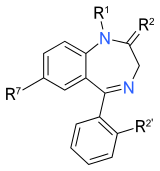
Chemical structure diagram of a benzene ring fused to a diazepine ring. Another benzene ring is attached to the bottom of the diazepine ring via a single line. Attached to the first benzene ring is a side chain labeled R7; to the second, a side chain labeled R2'; and attached to the diazepine ring, two side chains labeled R1 and R2.

Benzodiazepine and related drug use is associated with a 40 per cent increase in mortality among persons with Alzheimer's disease, according to a new study from the University of Eastern Finland. The findings were published in the International Journal of Geriatric Psychiatry.
The study found that the risk of death was increased right from the initiation of benzodiazepine and related drug use. The increased risk of death may result from the adverse events of these drugs, including fall-related injuries, such as hip fractures, as well as pneumonia and stroke.
The study was based on the register-based MEDALZ (Medication Use and Alzheimer's Disease) cohort, which includes all persons diagnosed with Alzheimer's disease in Finland during 2005-2011. Persons who had used benzodiazepines and related drugs previously were excluded from this study, and therefore, the study population consisted of 10,380 new users of these drugs. They were compared with 20,760 persons who did not use these drugs.
Although several treatment guidelines state that non-pharmacological options are the first-line treatment of anxiety, agitation and insomnia in persons with dementia, benzodiazepines and related drugs are frequently used in the treatment of these symptoms. If benzodiazepine and related drug use is necessary, these drugs are recommended for short-term use only. These new results encourage more consideration for benzodiazepine and related drug use in persons with dementia.
Ref : https://www.uef.fi/en/-/bentsodiatsepiinit-lisaavat-kuolleisuutta-alzheimerin-tautia-sairastavilla