Showing posts sorted by date for query abiraterone acetate. Sort by relevance Show all posts

Thursday, February 12, 2026

Niraparib Plus AAP Improves Survival in mCSPC With HRR Gene Alterations


In continuation of my update on Niraparib

For patients with metastatic castration-sensitive prostate cancer (mCSPC) with homologous recombination repair (HRR) gene alterations, the addition of niraparib to abiraterone acetate and prednisone (AAP) is beneficial, according to a study published online Oct. 7 in Nature Medicine.

Gerhardt Attard, M.D., Ph.D., from University College London, and colleagues conducted a double-blind trial that evaluated combining niraparib with AAP versus placebo and AAP in mCSPC with HRR gene alterations. A total of 696 patients were randomly assigned to niraparib or placebo (348 each).

Of the patients, 56 percent had BRCA1 or BRCA2 alterations and 78 percent had high-volume metastases. The researchers first observed significant improvement in radiographic progression-free survival in the BRCA subgroup (median not reached at the time of analysis for the niraparib and AAP group versus 26 months for the AAP group; hazard ratio, 0.52). Significant improvement was also seen in the intention-to-treat population (hazard ratio, 0.63). For overall survival, the data were immature but favored niraparib. The incidence of grade 3 or 4 adverse events was 75 and 59 percent in the niraparib and placebo groups, respectively; in the niraparib and AAP group, the most frequent adverse event was anemia (29 percent), with 25 percent of patients needing a blood transfusion.

"For cancers with a mutation in one of the eligible HRR genes, where niraparib has been approved, a doctor should consider a discussion that balances the risks of side effects against the clear benefit to delaying disease growth and worsening symptoms," Attard said in a statement.

Several authors disclosed ties to the biopharmaceutical industry, including Johnson & Johnson, which funded the study.

Abstract/Full Text

https://en.wikipedia.org/wiki/Niraparib

Niraparib Plus AAP Improves Survival in mCSPC With HRR Gene Alterations - Drugs.com MedNews

Wednesday, July 25, 2018

Sun Pharma Announces FDA Approval of Yonsa (abiraterone acetate) to Treat Metastatic Castration-Resistant Prostate Cancer

In continuation of my update on abiraterone acetate

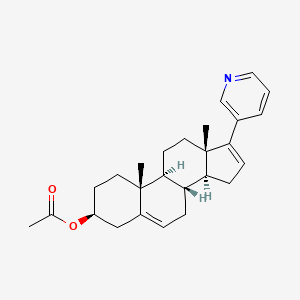
Abiraterone acetate.png

Sun Pharmaceutical Industries Ltd. and includes its subsidiaries and/or associate companies) and Churchill Pharmaceuticals, LLC. (Churchill) announced that one of Sun Pharma’s wholly owned subsidiary companies has received approval from the U.S. Food and Drug Administration (FDA) for Yonsa (abiraterone acetate), a novel formulation in combination with methylprednisolone, for the treatment of patients with metastatic castration-resistant prostate cancer (mCRPC).

“We are pleased to add Yonsa to our growing oncology portfolio and continue to deliver on Sun Pharma’s commitment for enhanced patient access to innovative cancer therapies,” said Abhay Gandhi, CEO - North America, Sun Pharma.
Yonsa in combination with methylprednisolone was filed as a New Drug Application (NDA) under the 505(b)(2) regulatory pathway and will be promoted as a branded product in the U.S.

Monday, July 15, 2013

Abiraterone: Hint of considerable added benefit for patients with metastatic prostate cancer

In continuation of  my update on Abiraterone

Abiraterone acetate (abiraterone for short, trade name: Zytiga) has been approved in Germany since December 2012 for men with metastatic prostate cancer that is not responsive to hormone blockade, who only have mild symptoms or so far none at all, and in whom chemotherapy is not yet indicated. In an early benefit assessment pursuant to the "Act on the Reform of the Market for Medicinal Products" (AMNOG), the German Institute for Quality and Efficiency in Health Care (IQWiG) examined whether abiraterone offers an added benefit compared with the present standard therapy....

Tuesday, July 24, 2012

For advanced prostate cancer, new drug slows disease

In continuation of my update on abiraterone
The study is the first randomized clinical trial to document expanded benefits among a particular group of prostate cancer patients in whom the disease had spread. The medication, abiraterone acetate -- marketed as Zytiga -- also delayed the development of pain and deterioration of the patients' overall condition.
The researchers say the medication could provide new treatment options.
"This drug extended lives and gave patients more time when they weren't experiencing significant pain from the disease,'' said the principal.....

For advanced prostate cancer, new drug slows disease

Wednesday, June 27, 2012

Abiraterone acetate can help eliminate prostate tumors

In continuation of my update Abiraterone

Abiraterone acetate can help eliminate prostate tumors: A hormone-depleting drug approved last year for the treatment of metastatic prostate cancer can help eliminate or nearly eliminate tumors in many patients with aggressive cancers that have yet to spread beyond the prostate, according to a clinical study to be presented at the annual meeting of the American Society of Clinical Oncology (ASCO), June 1-5, in Chicago.