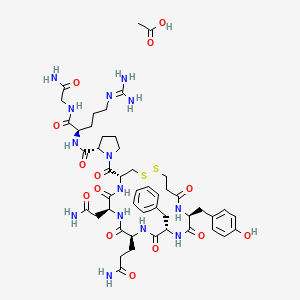
In continuation of my update on Desmoda

Eton Pharmaceuticals, Inc (“Eton” or “the Company”) (Nasdaq: ETON), an innovative pharmaceutical company focused on developing and commercializing treatments for rare diseases, today announced the U.S. Food and Drug Administration (FDA) approval of a New Drug Application (NDA) for Desmoda™ (desmopressin acetate) Oral Solution for the management of central diabetes insipidus, also known as arginine vasopressin deficiency (AVP-D), as antidiuretic replacement therapy for patients of all ages.
Desmoda is the first and only FDA-approved desmopressin oral solution
Commercial launch expected on March 9, 2026
Desmoda eliminates tablet splitting and crushing, enabling precise, individualized dosing for patients of all ages
The product is expected to be a significant long-term growth contributor, with potential peak sales of $30-50 million annually and patent protection extending through 2044
Desmoda is the first and only FDA-approved oral liquid formulation of desmopressin, developed to support precise, individualized dosing in a disease where careful titration is essential to maintaining water balance. Desmoda is supplied as a ready-to-use oral solution (0.05 mg/mL) that does not require tablet splitting, crushing, refrigeration, mixing, or shaking.
Eton estimates that there are more than 13,000 patients with central diabetes insipidus in the U.S., including approximately 3,000-4,000 pediatric patients. The company expects product peak sales of $30-50 million annually.
“Desmoda represents one of the most important product launches in Eton’s history. It builds on our strategy of delivering differentiated therapies to rare endocrine patients. By leveraging our existing pediatric endocrinology platform, we believe Desmoda has the potential to become a foundational therapy in this category,” said Sean Brynjelsen, Chief Executive Officer of Eton Pharmaceuticals. “In central diabetes insipidus, effective long-term management depends on accurately matching desmopressin dosing to each patient’s diurnal pattern of water balance. Historically, clinicians have primarily relied on formulations that were not designed for fine dose adjustments or had other administration issues, and both clinicians and families often had to rely on workarounds. Desmoda introduces a liquid solution designed to deliver individualized dosing precision and consistency for patients across the age spectrum.”
Central diabetes insipidus is a rare, but serious condition caused by inadequate production of the hormone vasopressin from the hypothalamus/posterior pituitary. Treatment with desmopressin is the standard of care, but dosing must be individualized to avoid complications related to over- or under-treatment. Oral liquid dosing allows clinicians to incrementally fine-tune therapy and adjust dosing over time as clinical needs evolve.
“Central diabetes insipidus requires careful, individualized management, where dosing precision and flexibility truly matter. Having a liquid formulation of desmopressin has the potential to meaningfully support how we initiate and manage therapy. It’s encouraging to see innovation that directly addresses real-world challenges faced by clinicians and families and gives greater confidence when tailoring treatment across age groups,” said Dr. Lewis Blevins, Director of the California Center for Pituitary Disorders and Professor of Medicine and Neurological Surgery at the University of California, San Francisco.
“For families living with central diabetes insipidus/AVP-D, treatment demands precision, consistency, and careful management of dosing. A liquid option like Desmoda is a meaningful improvement because it helps make sure that the dose is always right, every time. This is very important in cases where the wrong dose can have a big impact," said Muriël Marks, board member of Worldwide Adrenal and Pituitary Organizations (‘WAPO’).
Desmoda will be promoted by Eton’s existing team of pediatric endocrinology rare disease specialists which currently promotes ALKINDI SPRINKLE® (hydrocortisone), KHINDIVITM (hydrocortisone), and INCRELEX® (mecasermin). Desmoda is expected to be available on March 9th exclusively through Anovo, a specialty pharmacy dedicated to serving patients with rare and chronic conditions. Anovo will administer the Eton Cares Program in partnership with Eton Pharmaceuticals. The program provides prescription fulfillment, insurance benefits investigation, educational support, financial assistance for qualified patients, and other services designed to help patients access treatment. Eton Cares will offer co-pay assistance to allow for $0 co-pay for qualifying patients.
https://en.wikipedia.org/wiki/Desmopressin