Showing posts sorted by relevance for query Cefepime. Sort by date Show all posts

Monday, September 2, 2024

Cefepime-Taniborbactam Superior to Meropenem for Complicated UTI

For adults with complicated urinary tract infection (UTI), including acute pyelonephritis, cefepime-taniborbactam is superior to meropenem, according to a study published in the Feb. 15 issue of the New England Journal of Medicine.


                                                                        Cefepime 


Florian M. Wagenlehner, M.D., from Justus Liebig University in Giessen, Germany, and colleagues conducted a phase 3 randomized trial involving hospitalized adults with complicated UTI, including acute pyelonephritis. Participants were randomly assigned to receive intravenous cefepime-taniborbactam (2.5 g) or meropenem (1 g) every eight hours for seven days in a 2:1 ratio; in the case of bacteremia, this duration could be extended up to 14 days.

The researchers found that composite success (microbiologic and clinical success on trial days 19 to 23) occurred in 70.6 and 58.0 percent of patients in the cefepime-taniborbactam and meropenem groups, respectively, with cefepime-taniborbactam superior to meropenem (treatment difference, 12.6 percentage points). At late follow-up (days 28 to 35), differences in treatment response were sustained, with higher composite success and clinical success seen for cefepime-taniborbactam. Adverse events occurred in 35.5 and 29.0 percent of patients in the cefepime-taniborbactam and meropenem groups, respectively; the two groups had a similar frequency of serious adverse events.

"Cefepime-taniborbactam was shown to be a potential treatment option for patients with complicated UTI and acute pyelonephritis caused by Enterobacterales species and P. aeruginosa, including antimicrobial-resistant strains," the authors write.

The study was funded by VenatoRx Pharmaceuticals, the developer of cefepime-taniborbactam.

https://www.nejm.org/doi/full/10.1056/NEJMoa2304748


Cefepime-Taniborbactam Superior to Meropenem for Complicated UTI  

Saturday, October 31, 2026

FDA Approves Zaynich (cefepime and zidebactam) for the Treatment of Complicated Urinary Tract Infections

In continuation of my update on cefepime


cefepime

Zidebactam


FDA approved Zaynich (cefepime and zidebactam), a novel intravenous antibiotic for the treatment of adults with complicated urinary tract infections (cUTI), including pyelonephritis, caused by susceptible Gram-negative pathogens. Zaynich previously received Qualified Infectious Disease Product (QIDP) and Fast Track designations from the FDA.

  • Zaynich is a multi- penicillin-binding protein targeting combination of the 4 th generation cephalosporin cefepime and zidebactam working synergistically against the most challenging multidrug-resistant Gram-negative bacteria
  • In the Phase 3 ENHANCE-1 clinical trial, Zaynich demonstrated higher combined clinical cure and microbiologic response (composite endpoint) at the test of cure (TOC) visit versus meropenem, 89.0% vs 68.4% respectively and was generally well tolerated
  • More than 2.8 million antimicrobial-resistant infections occur each year in the U.S., resulting in more than 35,000 deaths1

“The threat of drug-resistant infections is an escalating crisis, leaving clinicians with fewer tools to treat patients facing these aggressive pathogens. The FDA approval of Zaynich is a monumental step forward in validating a new option for these underserved populations,” said Dennis Deruelle, MD, FHM, Chief Medical Officer at Wockhardt. “This milestone underscores our commitment to addressing critical unmet needs and offers a profound sense of hope to the families we are working to serve.”

“This approval is a significant realization of our mission to provide patients with novel antibiotics that help to address one of the most urgent global health threats—antimicrobial resistance,”2 said Dr. Habil F. Khorakiwala, Founder and Chairman of Wockhardt Group. “Furthermore, Zaynich is the first New Chemical Entity fully developed and commercialized by an Indian pharmaceutical company to receive an FDA approval, representing a historic milestone not only for Wockhardt, but for the Indian pharmaceutical industry.”

Zaynich, unlike most other beta-lactam combinations, targets multiple penicillin binding proteins (PBP 1a/b, 2 and 3) simultaneously. This unique, multi-target synergy provides bactericidal activity against the most challenging drug-resistant Gram-negative bacteria for which there are currently very limited treatment options.

“Multidrug-resistant bacterial infections are a substantial burden for patients and the healthcare system, as patients with these infections typically require longer, more intensive care, and are at increased risk of lifethreatening complications,” explained Keith Kaye, MD, MPH, Professor of Medicine and Division Chief for Infectious Diseases at Rutgers Robert Wood Johnson Medical School. “There is an ongoing need for new antibiotics to combat these drug-resistant pathogens, and we are pleased that this approval means patients will soon have an exciting unique option that is urgently needed in the US and worldwide.”

cUTI is responsible for over 600,000 hospitalizations in the U.S. annually. A growing number of cUTIs are caused by antimicrobial resistant bacteria, including multidrug-resistant bacteria, a leading cause of bacteremia and associated with significant morbidity and mortality and a burden on the health care system.3

The FDA approval was based, in part, on the results from ENHANCE-1, a Phase 3, randomized, double-blind, multicenter study which evaluated the efficacy, safety and tolerability of Zaynich compared with meropenem in the treatment of hospitalized adults with cUTI or acute pyelonephritis (AP). Zaynich demonstrated efficacy at the primary endpoint, achieving a composite clinical cure and microbiological response rate of 89.0% versus 68.4% for meropenem Treatment difference 20.6% (95% CI; 12.3, 29.5). Zaynich was generally well tolerated in the phase 3 study. The study enrolled 530 patients from the U.S., Europe, LATAM, China and India, and spanned across 64 sites.

Zaynich® was approved by the Drugs Controller General of India (DCGI) on May 27, 2026. Wockhardt has also submitted a Marketing Authorization Application (MAA) to the European Medicines Agency.

FDA Approves Zaynich (cefepime and zidebactam) for the Treatment of Complicated Urinary Tract Infections

Tuesday, September 10, 2024

FDA Approves Exblifep (cefepime/enmetazobactam) for the Treatment of Complicated Urinary Tract Infections,


Allecra Therapeutics (“Allecra”), a biopharmaceutical company developing novel therapies to combat antibiotic resistance, announced today that the U.S. Food and Drug Administration (FDA) has approved Exblifep (cefepime/enmetazobactam), as a treatment for complicated urinary tract infections (cUTIs), including pyelonephritis, in patients 18 years and older. Allecra has also received a five-year marketing exclusivity extension from the FDA as part of the Generating Antibiotic Incentives Now Act (GAIN Act). The GAIN Act, enacted by the U.S. Congress, incentivizes the creation of new anti-infective therapeutics by providing benefits to manufacturers of Qualified Infectious Disease. Products (QIDPs).

"Receiving FDA approval is a tremendous achievement for Allecra and a testament to the hard work and dedication of a small, yet highly focused team of individuals. I extend my sincere congratulations to my colleagues Omar Lahlou and Patrick Velicitat for their leadership and oversight throughout this whole process,” said Iain Buchanan, Supervisory Board Member of Allecra Therapeutics. “As we continue our discussions with strategic partners for product launch in the U.S., we value the FDA’s positive decision on Exblifep’s ability to address a critical unmet medical need for patients.”

The FDA’s approval of Exblifep was supported by a totality of clinical data that demonstrated Exblifep effectiveness against antimicrobial resistance in gram-negative bacteria, especially resistance mediated by both ESBL (Extended Spectrum Beta Lactamases) and AmpC. This included results from Allecra’s Phase 3 ALLIUM trial, which met criteria for non-inferiority and superiority compared to piperacillin/tazobactam in the primary composite outcome of clinical cure and microbiological eradication in patients with cUTIs.

Allecra is the sole holder of a significant patent estate covering Exblifep in major territories with the GAIN Act extending Allecra’s market exclusivity until 2032. Enmetazobactam was first discovered by Orchid Pharma and all rights outside India were assigned to Allecra Therapeutics in 2013. The company has since taken the sole responsibility for the international clinical and regulatory development of Exblifep. Allecra was founded through a strategic partnership formed by Nicholas Benedict, Stuart Shapiro and Edward Currie in conjunction with Orchid Chemicals and Pharmaceuticals Ltd. and Allecra lead investors, Andera Partners, Forbion and EMBL Ventures. The company has concluded exclusive license agreements for Exblifep with Shanghai Haini Pharmaceutical in Greater China and ADVANZ PHARMA in Europe.

https://en.wikipedia.org/wiki/Cefepime/enmetazobactam
https://pubchem.ncbi.nlm.nih.gov/compound/Enmetazobactam#section=2D-Structure

FDA Approves Exblifep (cefepime/enmetazobactam) for the Treatment of Complicated Urinary Tract Infections

Saturday, March 30, 2019

Allergan Announces FDA Approval of Avycaz (ceftazidime and avibactam) for Pediatric Patients

Allergan plc (NYSE: AGN) announced that the U.S. Food and Drug Administration (FDA) has approved the company's supplemental New Drug Application (sNDA) for Avycaz (ceftazidime and avibactam), expanding the label to include pediatric patients 3 months and older for the treatment of complicated intra-abdominal infections (cIAI) in combination with metronidazole and complicated urinary tract infections (cUTI). This is the first FDA approval of a pediatric indication for cUTI and cIAI in more than a decade.
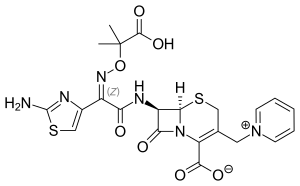
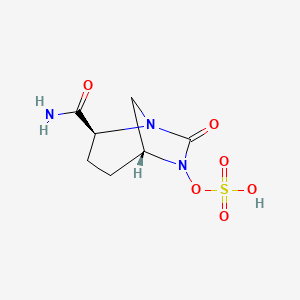
Ceftazidime.svg      Avibactam.png

"Difficult-to-treat gram-negative pathogens pose a significant health risk, particularly to the vulnerable and sensitive pediatric patient population with few options for treatment," said David Nicholson, Chief Research & Development Officer at Allergan.  "As resistance rises among the gram-negative pathogens that cause these serious infections, the expanded label for Avycaz provides a safe and effective treatment option now for pediatric patients with cIAI and cUTI. These expanded indications in pediatric patients with infections, including infants and those at a particularly young age, address an unmet need among this vulnerable population and  underscore Allergan's efforts in anti-infective research."
The label expansion was approved based on results from two active-controlled clinical studies evaluating Avycaz in children or infants with cIAI or cUTI, as well as a single-dose pharmacokinetic study. In the cIAI study, the safety and efficacy of Avycaz (in combination with metronidazole) was compared with meropenem. In the cUTI study, Avycaz was compared with cefepime.
Across the trials, 128 pediatric patients 3 months to less than 18 years of age were treated with Avycaz. Overall, the findings from the pediatric studies were similar to the previous determination of safety for Avycaz for the treatment of adult patients with cIAI or cUTI, and no new safety concerns were identified in pediatric patients.
The primary objectives of the studies were to evaluate the safety and tolerability of Avycaz, and they were not powered for a statistical analysis of efficacy. The descriptive efficacy analyses in the pediatric studies were consistent with data from studies in adults with cIAI and cUTI. In the pediatric cIAI study, the clinical cure rate at the test-of-cure (TOC) visit in the intent-to-treat (ITT) population was 91.8% (56/61) in the Avycaz plus metronidazole group and 95.5% (21/22) in the meropenem group. Clinical cure rates for the predominant pathogens, Escherichia coli and Pseudomonas aeruginosa, were 90.5% and 85.7%, respectively for patients treated with Avycaz plus metronidazole, and 92.3% and 88.9%, respectively, for patients treated with meropenem. In the pediatric cUTI study, the combined favorable clinical and microbiological response rate at TOC in the microbiological-ITT population was 72.2% (39/54) in the Avycaz group and 60.9% (14/23) in the cefepime group. The microbiologic response rate for E.coli, the most common uropathogen identified in the study, was 79.6% for patients treated with Avycaz and 59.1% for patients treated with cefepime.
Avycaz was first approved by the FDA in February 2015 for the treatment of cUTI including pyelonephritis, and cIAI in combination with metronidazole, caused by designated susceptible bacteria including certain Enterobacteriaceae and P. aeruginosa, for patients 18 years of age and older. Avycaz was subsequently approved for the treatment of adults with hospital-acquired pneumonia / ventilator-associated pneumonia (HABP/VABP) caused by designated susceptible bacteria in February 2018.

About Avycaz (ceftazidime and avibactam)

Avycaz is a fixed-dose combination antibacterial indicated for the treatment of cIAI (in combination with metronidazole), and cUTI caused by designated susceptible Gram-negative microorganisms in patients 3 months or older. Avycaz is also indicated for the treatment  of hospital-acquired bacterial pneumonia and ventilator-associated bacterial pneumonia (HABP/VABP) in adults. Avycaz consists of a combination of avibactam and ceftazidime.
Avibactam is a first-in-class non-beta-lactam beta-lactamase inhibitor which protects ceftazidime against degradation by certain beta-lactamases. Avibactam does not decrease the activity of ceftazidime against ceftazidime-susceptible organisms. Ceftazadime is a third-generation cephalosporin with a well-established efficacy and safety profile.
Avycaz has demonstrated in vitro activity against Enterobacteriaceae in the presence of some beta-lactamases and extended-spectrum beta-lactamases (ESBLs) of the following groups: TEM, SHV, CTX-M, Klebsiella pneumoniae carbapenemase (KPCs), AmpC and certain oxacillinases (OXA). Avycaz also demonstrated in vitro activity against P. aeruginosa in the presence of some AmpC beta-lactamases, and certain strains lacking outer membrane porin (OprD). Avycaz is not active against bacteria that produce metallo-beta lactamases and may not have activity against Gram-negative bacteria that overexpress efflux pumps or have porin mutations.
Ceftazidime and avibactam is being jointly developed with Pfizer. Allergan holds the rights to commercialize ceftazidime and avibactam in North America under the brand name Avycaz, while Pfizer holds the rights to commercialize the combination in the rest of the world under the brand 
Ref : https://www.drugbank.ca/drugs/DB00438
https://en.wikipedia.org/wiki/Ceftazidime
https://en.wikipedia.org/wiki/Avibactam
https://pubchem.ncbi.nlm.nih.gov/compound/Avibactam#section=2D-Structure