Showing posts with label for. Show all posts

Thursday, July 16, 2026

FDA Approves Zycubo (copper histidinate) for Children With Menkes Disease

Sentynl Therapeutics Inc. (“Sentynl”), a U.S.-based biopharmaceutical company wholly-owned by Zydus Lifesciences Limited (“Zydus Group”), announced that the U.S. Food and Drug Administration (“FDA”) has approved Zycubo® (copper histidinate) for the treatment of Menkes disease in pediatric patients. This is the first and only treatment approved for Menkes disease, a rare and fatal genetic condition, in the United States. Zycubo® is not indicated for the treatment of Occipital Horn Syndrome.


“Approval is a pivotal step towards achieving our goal of making a meaningful impact on patients, caregivers, and the rare disease community,” said Dr. Sharvil P. Patel, Managing Director, Zydus Lifesciences Limited. “This milestone marks a transformative moment for the Zydus Group and for families affected by Menkes disease. For the first time, patients have access to an approved therapy, offering hope where no options existed. We are proud to advance patient care and deliver innovative solutions to those who need them most.”

Menkes disease is a rare X-linked recessive pediatric disease caused by mutations of the copper transporter ATP7A encoded by the ATP7A gene. Patients with Menkes disease are born with the inability to absorb dietary copper and subsequently have impaired copper transport across the blood-brain barrier, and, until now, there has been no approved treatment in the United States. Zycubo® is a subcutaneous injectable formulation of copper histidinate that restores copper homeostasis and maintains copper levels in patients with Menkes disease.

“Menkes disease presents significant challenges for patients and their families. With no known cure, most untreated patients do not survive beyond three years of age,” said Matt Heck, CEO, Sentynl. “FDA’s approval serves as compelling affirmation that a safe and effective therapy is now available for patients living with this devastating disease.”

The approval is supported by positive topline clinical efficacy results for Zycubo, demonstrating statistically significant improvement in overall survival for Menkes disease subjects who received early treatment (“ET”) with Zycubo, compared to an untreated contemporaneous external control cohort, with a nearly 80% reduction in the risk of death. Median overall survival (“OS”) was 177.1 months for Zycubo ET cohort compared to 17.6 months for the untreated contemporaneous external control cohort.

The most common adverse reactions (incidence ≥7%) were pneumonia, viral infection, respiratory failure, seizure, bacterial infection, hemorrhage, hypotension, vomiting, tachycardia, pyrexia, volume depletion, fracture, dyspnea, transaminases elevation, diarrhea, fungal infection, anemia, and local administration reaction.

“This milestone represents the culmination of decades of research into better understanding and ultimately finding an effective treatment for Menkes disease,” said Dr. Stephen Kaler, a clinical genetics and genomics specialist at the Columbia University Medical Center. “Increased awareness of Menkes disease and rapid testing upon suspicion are critical, as beginning copper histidinate therapy in affected neonates has been shown to reduce symptoms and prolong life.”

Acquired from Cyprium Therapeutics in 2023, Sentynl has advanced Zycubo through the final stages of development with the FDA based on positive results from pivotal studies, receiving Breakthrough Therapy, Fast Track, Rare Pediatric Disease, and the FDA Orphan Drug Designations. Copper histidinate has also been granted Orphan Designation by the European Medicines Agency.

ttps://upload.wikimedia.org/wikipedia/commons/thumb/a/ae/Copper_histidinate_v2.svg/250px-Copper_histidinate_v2.svg.png


Wednesday, July 15, 2026

FDA Approves Zycubo (copper histidinate) for Children With Menkes Disease


Sentynl Therapeutics Inc. (“Sentynl”), a U.S.-based biopharmaceutical company wholly-owned by Zydus Lifesciences Limited (“Zydus Group”), announced that the U.S. Food and Drug Administration (“FDA”) has approved Zycubo® (copper histidinate) for the treatment of Menkes disease in pediatric patients. This is the first and only treatment approved for Menkes disease, a rare and fatal genetic condition, in the United States. Zycubo® is not indicated for the treatment of Occipital Horn Syndrome.


“Approval is a pivotal step towards achieving our goal of making a meaningful impact on patients, caregivers, and the rare disease community,” said Dr. Sharvil P. Patel, Managing Director, Zydus Lifesciences Limited. “This milestone marks a transformative moment for the Zydus Group and for families affected by Menkes disease. For the first time, patients have access to an approved therapy, offering hope where no options existed. We are proud to advance patient care and deliver innovative solutions to those who need them most.”

Menkes disease is a rare X-linked recessive pediatric disease caused by mutations of the copper transporter ATP7A encoded by the ATP7A gene. Patients with Menkes disease are born with the inability to absorb dietary copper and subsequently have impaired copper transport across the blood-brain barrier, and, until now, there has been no approved treatment in the United States. Zycubo® is a subcutaneous injectable formulation of copper histidinate that restores copper homeostasis and maintains copper levels in patients with Menkes disease.

“Menkes disease presents significant challenges for patients and their families. With no known cure, most untreated patients do not survive beyond three years of age,” said Matt Heck, CEO, Sentynl. “FDA’s approval serves as compelling affirmation that a safe and effective therapy is now available for patients living with this devastating disease.”

The approval is supported by positive topline clinical efficacy results for Zycubo, demonstrating statistically significant improvement in overall survival for Menkes disease subjects who received early treatment (“ET”) with Zycubo, compared to an untreated contemporaneous external control cohort, with a nearly 80% reduction in the risk of death. Median overall survival (“OS”) was 177.1 months for Zycubo ET cohort compared to 17.6 months for the untreated contemporaneous external control cohort.

The most common adverse reactions (incidence ≥7%) were pneumonia, viral infection, respiratory failure, seizure, bacterial infection, hemorrhage, hypotension, vomiting, tachycardia, pyrexia, volume depletion, fracture, dyspnea, transaminases elevation, diarrhea, fungal infection, anemia, and local administration reaction.

“This milestone represents the culmination of decades of research into better understanding and ultimately finding an effective treatment for Menkes disease,” said Dr. Stephen Kaler, a clinical genetics and genomics specialist at the Columbia University Medical Center. “Increased awareness of Menkes disease and rapid testing upon suspicion are critical, as beginning copper histidinate therapy in affected neonates has been shown to reduce symptoms and prolong life.”

Acquired from Cyprium Therapeutics in 2023, Sentynl has advanced Zycubo through the final stages of development with the FDA based on positive results from pivotal studies, receiving Breakthrough Therapy, Fast Track, Rare Pediatric Disease, and the FDA Orphan Drug Designations. Copper histidinate has also been granted Orphan Designation by the European Medicines Agency.


Saturday, July 11, 2026

FDA Approves Bysanti (milsaperidone) for the treatment of Bipolar I Disorder and Schizophrenia

Vanda Pharmaceuticals Inc. (Nasdaq: VNDA) today announced that the U.S. Food and Drug Administration (FDA) has approved Bysanti (milsaperidone) tablets, a first line therapy for the acute treatment of manic or mixed episodes associated with bipolar I disorder and for the treatment of schizophrenia in adults.


Bysanti is a new chemical entity (NCE) that belongs in the class of atypical antipsychotics. In clinical studies Bysanti demonstrated bioequivalence to iloperidone across the therapeutic dosing spectrum enabling it to leverage well-established knowledge of efficacy and safety derived from a rich clinical development program and more than 100,000 patient-years of real-world experience with Fanapt® (iloperidone). As such Bysanti represents a novel therapeutic option with a trusted safety profile in the treatment of these serious psychiatric conditions.

"The Bysanti approval marks a significant step forward, offering patients and providers a reliable new treatment grounded in extensive clinical heritage," said Mihael H. Polymeropoulos, M.D., President, CEO and Chairman of the Board of Vanda Pharmaceuticals. "Bysanti exemplifies a new era of accelerated innovation in drug development that can transform how we address unmet needs in behavioral health."

Bysanti is currently being tested as a once-daily adjunctive treatment in treatment-resistant major depressive disorder in an ongoing clinical study expected to complete by the end of this year.

Bysanti (milsaperidone), a new chemical entity, rapidly interconverts to iloperidone, providing dual active molecules that work in tandem by antagonizing dopamine D2, serotonin 5-HT2A, and alpha1-adrenergic receptors to modulate key pathways in these disorders. Its safety profile aligns closely with that established for iloperidone.

Bysanti's unique in-class receptor binding profile, featuring strong alpha-adrenergic binding in excess of dopamine and serotonin receptor binding, makes it suitable for further investigation in conditions that include symptoms of hostility, agitation, and hyperarousal.

https://en.wikipedia.org/wiki/Milsaperidone

FDA Approves Bysanti (milsaperidone) for the treatment of Bipolar I Disorder and Schizophrenia

Tuesday, July 7, 2026

FDA Approves Icotyde (icotrokinra) for the Treatment of Plaque Psoriasis

Johnson & Johnson (NYSE: JNJ) announced today that the U.S. Food and Drug Administration (FDA) has approved Icotyde (icotrokinra), an interleukin-23 (IL-23) receptor antagonist for the treatment of moderate-to-severe plaque psoriasis in adults and pediatric patients 12 years of age and older who weigh at least 40 kg who are candidates for systemic therapy or phototherapy. Icotyde is the first and only targeted oral peptide that precisely blocks the IL-23 receptor.


  • Johnson & Johnson introduces the first and only IL-23R targeted oral peptide that delivers complete skin clearance and favorable safety profile in a once-daily pill
  • Icotyde offers an innovative new option for patients with moderate-to-severe plaque psoriasis to address patients cycling on topical therapies in need of systemic treatment

“Icotyde delivers something unique in psoriasis treatment – combining skin clearance with a favorable safety profile in a once‑daily pill, making it an easy addition to a patient’s routine,” said Linda Stein Gold, M.D., Director of Dermatology Clinical Research at Henry Ford Health.a “With new guidance from the International Psoriasis Council that clarifies when to move beyond cycling on topical treatments to systemic therapy, an innovative option like Icotyde is a potential game‑changer for many adult and adolescent patients.”

Clinical evidence summary
Icotyde met all primary efficacy endpoints and demonstrated a favorable safety profile across four Phase 3 studies including 2,500 patients. The approval is based on an unprecedented body of evidence from the ICONIC clinical development program, which simultaneously evaluated Icotyde in adults and adolescents, high impact sites such as scalp and genital PsO, and in duplicate head-to-head trials versus an active comparator. In the head-to-head superiority studies, approximately 70% of patients achieved clear or almost clear skin (IGA 0/1) and 55% of patients achieved a Psoriasis Area and Severity Index (PASI) 90 response at Week 16.3,b,c Rates of adverse reactions for Icotyde treated patients were within 1.1% of placebo through Week 16 and no new safety signals were identified through Week 52.

“With the FDA approval of Icotyde, Johnson & Johnson is setting a new standard for the treatment of moderate-to-severe plaque psoriasis,” said Jennifer Taubert, Executive Vice President, Worldwide Chairman, Innovative Medicine, Johnson & Johnson. “We’re proud to bring this game-changing innovation to the market, marking a transformative shift in plaque psoriasis management that empowers patients and clinicians to reach their treatment goals.

Unmet need in moderate-to-severe plaque psoriasis
Psoriasis affects more than 8 million Americans, impacting physical comfort and quality of life, especially when lesions are on visible or sensitive areas.5 For many with moderate-to-severe disease, targeted systemic treatments are key. This aligns with International Psoriasis Council guidance to transition to systemic therapy if two cycles of topical medications applied for four weeks fail to bring meaningful improvement.

“Finding the right treatment can take time, during which people with psoriatic disease should be considering multiple factors from efficacy to safety to how the treatment fits into their everyday life,” said Leah M. Howard, J.D., President and CEO of the National Psoriasis Foundation.d “The approval of a novel systemic therapy changes the conversation about treatment options for our community.”

“The approval of Icotyde represents a pivotal moment for people with plaque psoriasis,” said John Reed, M.D., Ph.D., Executive Vice President, R&D, Innovative Medicine, Johnson & Johnson. “At Johnson & Johnson, we are harnessing our scientific expertise to transform cutting-edge science into meaningful solutions for patients. Icotyde is a fundamentally different treatment with the potential to redefine what physicians and patients can expect from psoriasis treatment. 

https://en.wikipedia.org/wiki/Icotrokinra

Monday, July 6, 2026

FDA Approves Lynavoy (linerixibat) for Cholestatic Pruritus in Patients with Primary Biliary Cholangitis

GSK  announced   the US Food and Drug Administration (FDA)  approval of  Lynavoy (linerixibat) for the treatment of cholestatic pruritus in adult patients with PBC. Lynavoy, an ileal bile acid transporter (IBAT) inhibitor that reduces multiple drivers of chronic itch, is the first medicine approved in the US for this indication.5
Lynavoy, an ileal bile acid transporter (IBAT) inhibitor, is the first medicine approved in the US for the treatment of cholestatic pruritus in patients with PBC
Up to 89% of people living with PBC experience cholestatic pruritus, an internal itch with a debilitating impact on quality of life1-4


Approval based on the positive GLISTEN phase III trial with regulatory reviews underway in the EU, UK, Canada and China

GSK previously announced on 9 March a licence agreement under which Alfasigma S.p.A. will acquire worldwide exclusive rights to develop, manufacture and commercialise linerixibat. This transaction is ongoing and is subject to customary conditions, including applicable regulatory agency clearances such as under the Hart-Scott-Rodino Act in the US.

Cholestatic pruritus is an internal itch experienced by up to 89% of people living with PBC, a rare autoimmune disease that can lead to liver failure.1-4 It is a serious condition that can be debilitating, with patients experiencing sleep disturbance, fatigue, impaired quality of life and even sometimes requiring liver transplantation in the absence of liver failure

https://en.wikipedia.org/wiki/Linerixibat

FDA Approves Lynavoy (linerixibat) for Cholestatic Pruritus in Patients with Primary Biliary Cholangitis

Tuesday, June 30, 2026

Praxis Precision Medicines Announces FDA Acceptance and Priority Review of New Drug Application for Relutrigine in Patients with SCN2A and SCN8A DEEs

Praxis Precision Medicines, Inc. (NASDAQ: PRAX), a fully integrated, leading central nervous system (CNS) precision neuroscience biopharmaceutical company, today announced that the U.S. Food and Drug Administration (FDA) has accepted for priority review its New Drug Application (NDA) for relutrigine, for the treatment of SCN2A and SCN8A developmental and epileptic encephalopathies (DEEs). The FDA has set a target action date under the Prescription Drug User Fee Act (PDUFA) of September 27, 2026.


  • FDA assigned PDUFA target action date of September 27, 2026

“Our first FDA acceptance of an NDA submission marks a significant milestone in our evolution to a commercial-stage company and an important step toward delivering innovative, precision neuroscience therapies to patients in need. SCN2A/8A DEEs have no currently approved targeted therapies and relutrigine, if approved, would be the first disease-modifying therapy for children suffering from these devastating and fatal conditions. We look forward to working closely with the FDA during the review process while continuing to advance our launch preparations,” said Marcio Souza, president and chief executive officer.

Relutrigine for treatment of SCN2A/8A DEEs
The NDA is supported by positive results from the EMBOLD study, which was stopped early for efficacy following a successful interim analysis and recommendation from the Data Monitoring Committee. Relutrigine has an Orphan Drug Designation, as well as a Rare Pediatric Disease Designation and a Breakthrough Therapy Designation. If granted approval, relutrigine will be the first FDA-approved therapy for SCN2A/8A DEE as well as be eligible for a Pediatric Review Voucher.

Relutrigine is also being investigated in broad DEEs through the EMERALD trial, which is expected to be completed by the end of 2026.

About Relutrigine
Relutrigine is a first-in-class small molecule in development for the treatment of developmental and epileptic encephalopathies (DEEs) as a preferential inhibitor of persistent sodium current, shown to be a key driver of seizure symptoms in severe DEEs. Relutrigine’s mechanism of precision sodium channel (NaV) modulation is consistent with superior selectivity for disease-state NaV channel hyperexcitability. In vivo studies of relutrigine have demonstrated dose-dependent inhibition of seizures up to complete control of seizure activity in SCN2A, SCN8A and other DEE mouse models. Relutrigine has been generally well-tolerated in three Phase 1 studies and has demonstrated biomarker changes indicative of NaV channel modulation. Data from cohort 1 of the Phase 2 EMBOLD study demonstrated a well-tolerated, robust, short- and long-term improvement in motor seizures in a heavily pre-treated population, alongside maintained seizure freedom in some patients with SCN2A- and SCN8A-DEE. Relutrigine has received Orphan Drug Designation (ODD) and Rare Pediatric Disease Designation from the FDA for the treatment of SCN2A-DEE, SCN8A-DEE and Dravet syndrome; as well as Breakthrough Therapy Designation (BTD), and ODD from the European Medicines Agency for the treatment of SCN2A-DEE and SCN8A-DEE.


Monday, June 29, 2026

Elevar Therapeutics Announces FDA Acceptance for Review of New Drug Application for Lirafugratinib as Second-line Cholangiocarcinoma Treatment

Elevar Therapeutics, Inc., a majority-owned subsidiary of HLB Co., Ltd. and a fully integrated biopharmaceutical company dedicated to elevating treatment experiences and outcomes for patients who have limited or inadequate therapeutic options, today announced that the U.S. Food and Drug Administration (FDA) has completed its filing review of the New Drug Application (NDA) for lirafugratinib, an investigational therapy, for the treatment of patients with cholangiocarcinoma (CCA) with FGFR2 fusions or rearrangements who have received prior therapy. The FDA determined that the NDA is sufficiently complete to permit a substantive review and granted Priority Review, with a Prescription Drug User Fee Act (PDUFA) target action date of September 27, 2026.


  • With Priority Review designation, FDA set a Sept. 27 PDUFA date for approval decision
  • Lirafugratinib achieved a 46.5% ORR, in CCA patients with FGFR2 fusion and rearrangement

Priority Review designations are given to applications for medicines that, if approved, would lead to “significant improvements in the safety or effectiveness of the treatment” of a serious condition, according to the FDA. The Priority Review designation of the lirafugratinib NDA was supported by positive clinical data from the Phase 1/2 ReFocus trial (NCT04526106), which demonstrated a confirmed objective response rate (ORR) of 46.5% in the patients with the proposed indication. Its safety profile in the clinical data has been shown to be predictable and manageable through dose adjustments.

“Lirafugratinib has established a compelling clinical profile that differentiates it from existing treatment options,” said Dong-Gun Kim, chief executive officer of Elevar. “We are very pleased with the FDA’s priority review designation and focused on advancing the review process efficiently to bring this therapy to patients as quickly as possible.”

CCA, also known as bile duct cancer, is rare, with about 8,000 people in the U.S. diagnosed each year, according to the American Cancer Society.

Elevar Therapeutics continues to evaluate lirafugratinib in ongoing clinical development programs, including studies in other FGFR2-altered solid tumors. Any future indications will be subject to regulatory review and approval.

For more information about lirafugratinib, visit ElevarTX.com.

About Lirafugratinib

Lirafugratinib (RLY-4008) is a potent, selective, and oral small molecule inhibitor of FGFR2, a receptor tyrosine kinase that is frequently altered in certain cancers. FGFR2 is one of four members of the FGFR family, a set of closely related proteins with highly similar protein sequences and properties. Preclinically, lirafugratinib demonstrated FGFR2-dependent killing in cancer cell lines and induced regression in in vivo models with minimal inhibition of other targets, including other members of the FGFR family. In addition, lirafugratinib demonstrated strong activity against known clinical on-target resistance mutations in vitro and in vivo preclinical models. Lirafugratinib is currently being evaluated in a clinical trial to enroll additional patients with previously treated, advanced or metastatic solid tumors other than CCA harboring FGFR2 fusion or rearrangement, who have not been treated with prior FGFR inhibitors.


Saturday, June 6, 2026

U.S. Food and Drug Administration Accepts Bristol Myers Squibb's New Drug Application for Iberdomide in Patients with Relapsed or Refractory Multiple Myeloma


Bristol Myers Squibb (NYSE: BMY) today announced that the U.S. Food and Drug Administration (FDA) has accepted a New Drug Application (NDA) for iberdomide combined with standard treatment (daratumumab + dexamethasone - IberDd) in patients with relapsed or refractory multiple myeloma (RRMM). Iberdomide is part of an investigational, new class of medicines called cereblon E3 ligase modulator (CELMoD) agents. The FDA has granted a Prescription Drug User Fee Act (PDUFA) date of August 17, 2026 for this indication.


  • Iberdomide has the potential to be the first approved CELMoD agent
  • The U.S. FDA has granted Breakthrough Therapy Designation and Priority Review for this indication and assigned a target action date of August 17, 2026

“The FDA’s acceptance of this application is a testament to the potential of iberdomide, in combination with anti-CD38 monoclonal antibodies, as a novel, potent, oral treatment option, with a manageable safety profile, for patients with multiple myeloma,” said Cristian Massacesi, executive vice president and chief medical officer, Bristol Myers Squibb. “Furthermore, our filing for iberdomide based on the MRD endpoint, underscores our commitment to pioneering new ways of advancing life-saving therapies for patients living with cancer.”

The filing was based on results from a planned analysis of MRD negativity rates in the Phase 3 EXCALIBER-RRMM study evaluating iberdomide as a treatment for RRMM patients. The EXCALIBER-RRMM trial is ongoing and patients continue to be evaluated for progression-free survival (PFS).

The FDA also granted Breakthrough Therapy designation for iberdomide based on these data.

This review is being conducted under the FDA’s Project Orbis initiative, which enables concurrent review by the health authorities in several other countries.

https://en.wikipedia.org/wiki/Iberdomide


Friday, May 29, 2026

FDA Approves Rhapsido (remibrutinib) for the Treatment of Chronic Spontaneous Urticaria

Novartis announced today that Rhapsido (remibrutinib) received US Food and Drug Administration (FDA) approval as an oral treatment for adult patients with chronic spontaneous urticaria (CSU) who remain symptomatic despite H1 antihistamine treatment. Rhapsido is a pill taken twice daily and does not require injections or lab monitoring. It is the first FDA-approved Bruton's tyrosine kinase inhibitor (BTKi) for CSU. Rhapsido helps to inhibit the release of histamine and other proinflammatory mediators by targeting BTK, offering a unique approach to CSU treatment.


"CSU is a serious disease that can cause debilitating symptoms and unpredictable flares. It's difficult to diagnose and manage," said Mark Lebwohl, MD, Dean for Clinical Therapeutics at the Icahn School of Medicine at Mount Sinai and member of the steering committee for the remibrutinib REMIX Phase III clinical trial program. "Remibrutinib represents a new way of treating CSU. By blocking the activity of BTK, remibrutinib stops a key pathway of the immune response in CSU. This is an exciting new option that has the potential to help a broad range of patients get fast relief."

CSU is a mast cell-driven condition thought to be caused by immune dysregulation. In people with CSU, the immune system can become activated through allergic (IgE) or autoimmune (IgG) pathways.4 This causes certain immune cells—mast cells and basophils—to activate the BTK protein. While not fully understood, it is believed that once activated, BTK leads to the release of histamine and other proinflammatory mediators that may cause the red, swollen, and itchy hives commonly seen in CSU.5,6

CSU symptoms are unpredictable, recurring for six weeks or more without an identified cause.7 Diagnosis can take up to 24 months.8 Many CSU patients say their symptoms negatively impact their sleep, work, and mental health.9,10,11 Antihistamines are the first-line treatment, but over half of patients still have symptoms, even at higher doses.2 Injectable treatments exist for those who don't respond to antihistamines, yet fewer than 20% of eligible patients receive them.12

"The approval of remibrutinib is an important development in CSU care. It quickly reduces symptoms, offering patients control of the hives and itching that they experience on a daily basis," said Giselle Mosnaim, MD, MS, an Allergist and Immunologist from Endeavor Health, Clinical Associate Professor at the University of Chicago Pritzker School of Medicine and REMIX trial investigator. "This is significant because it expands beyond existing injectable treatments and gives patients an oral option that can easily be incorporated into their daily lives."

"Many CSU patients feel misunderstood and settle for treatments that don't fully meet their needs," said Lynda Mitchell, CEO of Allergy & Asthma Network. "We support new treatment options that empower patients to choose what works best for them. This convenient new oral therapy offers a promising new way to manage CSU and potentially improve daily life for those living with this challenging condition."

Clinical data supporting approval
The FDA approval of Rhapsido in CSU is based on results from the Phase III REMIX-1 (NCT05030311) and REMIX-2 (NCT05032157) clinical trials in patients who remained symptomatic on second-generation H1 antihistamines. Rhapsido demonstrated superiority in change from baseline versus placebo in itch (ISS7), hives (HSS7), and weekly urticaria activity (UAS7) at Week 12.13 Significantly more patients treated with Rhapsido versus placebo achieved well-controlled disease (UAS7≤6) as early as Week 2 and at Week 12, and about one-third of patients achieved complete absence of itch and hives at Week 12.13 Rhapsido has a demonstrated safety profile that requires no lab monitoring.13 The most common adverse events (incidence ≥3%) were nasal congestion, sore throat, and runny nose (nasopharyngitis), bleeding, headache, nausea, and abdominal pain.13

Novartis has completed regulatory submissions for Rhapsido for the treatment of CSU across many countries, including in the European Union, Japan, and China, with priority review granted in China.

Transforming care in Immunology
"This approval of Rhapsido as the first and only BTK inhibitor in CSU is an important milestone in our journey to reshape care for overlooked immune-related conditions and offer more patients the potential to find fast relief," said Victor Bultó, President, US, Novartis. "Building on our legacy in advancing the treatment of allergic, dermatologic, and rheumatologic conditions, we are deeply committed to further investing in innovative, patient-focused therapies across immunology."

Discovered and developed by Novartis to target the BTK pathway as a driver of inflammation, remibrutinib is being investigated in ongoing clinical trials across a variety of immune-related conditions, including chronic inducible urticaria (CIndU), hidradenitis suppurativa (HS), and food allergy.

Rhapsido (remibrutinib) Indication

Rhapsido is a prescription medicine used to treat adults with chronic spontaneous urticaria (CSU) who continue to have symptoms that are not controlled with antihistamine treatment. Rhapsido should not be used to treat any other forms of hives (urticaria). It is not known if Rhapsido is safe and effective in children.

Rhapsido Important Safety Information

Before taking Rhapsido, patients should tell their health care provider about all of their medical conditions, including if they:

Have had a recent surgery or plan to have surgery. Health care providers may tell patients to stop taking Rhapsido for at least 3 to 7 days before and after any planned medical or surgical procedures
Have bleeding problems or are taking a blood thinner medicine
Have liver problems

Are pregnant or plan to become pregnant. It is not known if Rhapsido will harm an unborn baby. If patients become pregnant during treatment with Rhapsido, they should talk to their health care provider about registering in the pregnancy exposure registry for Rhapsido

Are breastfeeding or plan to breastfeed. It is not known if Rhapsido passes into breast milk
Have recently received or are scheduled to receive an immunization (vaccine). Patients should talk to their health care provider about receiving any immunizations before taking Rhapsido. They should not receive live or live-attenuated vaccines during treatment with Rhapsido

Patients should tell their health care provider about all the medicines they take, including prescription and over-the-counter medicines, vitamins, and herbal supplements. Taking Rhapsido with certain other medications may affect how Rhapsido or other medications work, and can cause side effects.

https://en.wikipedia.org/wiki/Remibrutinib

Thursday, May 21, 2026

FDA Approves Lasix ONYU (furosemide) for Treatment of Edema in Heart Failure


SQ Innovation, Inc. today announced that the U.S. Food and Drug Administration (FDA) has approved its drug-device combination Lasix ONYU (furosemide injection) for the treatment of edema (due to fluid overload) in adult patients with chronic heart failure. Lasix ONYU was developed to enable subcutaneous infusion of furosemide outside the healthcare setting for selected patients, as prescribed by a clinician without the need for a healthcare professional to administer the drug.

About 6.7 million Americans suffer from heart failure, with the prevalence expected to rise to 8.7 million by 2030. Heart failure is a leading cause of hospitalizations for individuals aged 65 and older with approximately 1.2 million hospitalizations per year [1].

Lasix ONYU consists of a novel high-concentration formulation of furosemide combined with a state-of-the-art small Infusor for treatment at home. The innovative design includes a reusable unit that can be used for 48 treatments and a plastic sterile single-use unit that is discarded after treatment. The two-component design reduces manufacturing complexity and cost, allowing the product to be offered at a different, more favorable price point which is expected to reduce barriers to widespread adoption.

“Lasix ONYU has the potential to be transformative in the care of patients experiencing worsening heart failure due to fluid overload,” said Pieter Muntendam, MD, founder, President and CEO of SQ Innovation. “Treating selected patients at home offers important benefits to patients, health systems and payors. We look forward to launching Lasix ONYU with leading health systems in the 4th quarter of 2025.”

Bioavailability and diuretic response were determined in a clinical study in which Lasix ONYU demonstrated complete bioavailability (112%) resulting in similar diuresis (115%) and natriuresis (117%) when compared to the same dose given by IV bolus. The biphasic delivery of furosemide by the Infusor resulted in a tempered diuretic response while IV bolus administration led to a shorter period of more intense diuresis. The results of the study were published in a leading cardiovascular journal [2].

“Heart failure is the most common serious medical condition in the U.S. and affects about one in four Americans during their lifetime. The number of patients affected is expected to double over the next 20 years and we currently already often lack adequate resources to take care of the 6.7 million patients affected presently – there are not enough beds, clinicians and funds”, said Dr. Javed Butler, Professor of Medicine at University of Mississippi and President, Baylor Scott and White Research Institute. “The only two actionable solutions now are more widespread adoption of guideline directed medical therapy (GDMT) and treating more patients at home with products such as subcutaneous diuretics instead of hospitalization for intravenous diuretics.”

“Decongestion through use of IV diuretics has been the cornerstone of treatment for reducing edema and hypervolemia in heart failure patients for over five decades,” stated S. Craig Thomas, Immediate Past President of the American Association of Heart Failure Nurses (AAHFN), an organization dedicated to advancing nursing education, clinical practice, and research to improve outcomes for heart failure patients. “The availability of accessible, affordable, and novel options that do not require the presence of a healthcare professional allows for transformative new clinical care-delivery. This means patients who now would typically need to be hospitalized for several days of IV treatment can instead remain home, supported by periodic or remote monitoring. The significance of this shift away from inpatient care for patients, hospitals, and payers cannot be overstated.”

Starting this quarter, Lasix ONYU will be available from leading pharmaceutical distributors enabling timely availability at participating medical facilities and affiliated retail pharmacies.

SQ Innovation is hosting a Conference Call and Webcast on Thursday October 9, at 4:30pm ET to introduce the product and answer questions from the community. Participating in the conference call will be:

Pieter Muntendam, MD, President and CEO of SQ Innovation
Mustafa M. Ahmed, MD, Professor of Medicine, Section Chief, Heart Failure, University of Florida Health, Gainesville, FL
Craig Thomas, Nurse Practitioner, Advanced Heart Failure Center, University of Virginia Health System, Charlottesville, VA and Immediate Past President American Association of Heart Failure Nurses (AAHFN)

https://en.wikipedia.org/wiki/Furosemide

FDA Approves Lasix ONYU (furosemide) for Treatment of Edema in Heart Failure

Thursday, May 7, 2026

Aldeyra Therapeutics Announces FDA Acceptance for Review of Reproxalap New Drug Application for the Treatment of Dry Eye Disease

Aldeyra Therapeutics, Inc. (Nasdaq: ALDX) (Aldeyra)  announced   the U.S. Food and Drug Administration (FDA)   acceptance the  review of the resubmitted New Drug Application (NDA) for topical ocular reproxalap, a first-in-class investigational new drug candidate, for the treatment of the signs and symptoms of dry eye disease. The FDA assigned a Prescription Drug User Fee Act (PDUFA) target action date of December 16, 2025.


“Based on the FDA’s requirement for an additional clinical trial demonstrating the efficacy of reproxalap in treating the symptoms of dry eye disease, and per agreement with the FDA, the NDA resubmission contained a single clinical trial that achieved the primary endpoint of reducing ocular discomfort relative to the vehicle control,” stated Todd C. Brady, M.D., Ph.D., President and Chief Executive Officer of Aldeyra. “We look forward to a productive dialog with the FDA during the NDA review of reproxalap, which, to our knowledge, remains the only dry eye disease investigational therapy to have demonstrated acute activity in reducing ocular discomfort and redness in pivotal trials simulating the disease flares that are likely the most bothersome aspects of dry eye disease.”

About Reproxalap

Reproxalap is an investigational new drug candidate in development for the treatment of dry eye disease and allergic conjunctivitis, two of the largest markets in ophthalmology. Reproxalap is a first-in-class small-molecule modulator of RASP, which are elevated in ocular and systemic inflammatory diseases. The mechanism of action of reproxalap has been supported by the demonstration of statistically significant and clinically relevant activity in multiple physiologically distinct late-phase clinical indications. Reproxalap has been studied in more than 2,900 patients with no observed safety concerns; mild and transient instillation site irritation is the most commonly reported adverse event in clinical trials.

https://go.drugbank.com/drugs/DB16688

Friday, May 17, 2019

FDA Approves Zulresso (brexanolone) for the Treatment of Postpartum Depression

U.S. Food and Drug Administration   approved Zulresso (brexanolone) injection for intravenous (IV) use for the treatment of postpartum depression (PPD) in adult women. This is the first drug approved by the FDA specifically for PPD.
Skeletal formula of allopregnanolone
"Postpartum depression is a serious condition that, when severe, can be life-threatening. Women may experience thoughts about harming themselves or harming their child. Postpartum depression can also interfere with the maternal-infant bond. This approval marks the first time a drug has been specifically approved to treat postpartum depression, providing an important new treatment option," said Tiffany Farchione, M.D., acting director of the Division of Psychiatry Products in the FDA’s Center for Drug Evaluation and Research. "Because of concerns about serious risks, including excessive sedation or sudden loss of consciousness during administration, Zulresso has been approved with a Risk Evaluation and Mitigation Strategy (REMS) and is only available to patients through a restricted distribution program at certified health care facilities where the health care provider can carefully monitor the patient."
PPD is a major depressive episode that occurs following childbirth, although symptoms can start during pregnancy. As with other forms of depression, it is characterized by sadness and/or loss of interest in activities that one used to enjoy and a decreased ability to feel pleasure (anhedonia) and may present with symptoms such as cognitive impairment, feelings of worthlessness or guilt, or suicidal ideation.
Zulresso will be available only through a restricted program called the Zulresso REMS Program that requires the drug be administered by a health care provider in a certified health care facility. The REMS requires that patients be enrolled in the program prior to administration of the drug. Zulresso is administered as a continuous IV infusion over a total of 60 hours (2.5 days). Because of the risk of serious harm due to the sudden loss of consciousness, patients must be monitored for excessive sedation and sudden loss of consciousness and have continuous pulse oximetry monitoring (monitors oxygen levels in the blood). While receiving the infusion, patients must be accompanied during interactions with their child(ren). The need for these steps is addressed in a Boxed Warning in the drug’s prescribing information. Patients will be counseled on the risks of Zulresso treatment and instructed that they must be monitored for these effects at a health care facility for the entire 60 hours of infusion. Patients should not drive, operate machinery, or do other dangerous activities until feelings of sleepiness from the treatment have completely gone away.
The efficacy of Zulresso was shown in two clinical studies in participants who received a 60-hour continuous intravenous infusion of Zulresso or placebo and were then followed for four weeks. One study included patients with severe PPD and the other included patients with moderate PPD. The primary measure in the study was the mean change from baseline in depressive symptoms as measured by a depression rating scale. In both placebo controlled studies, Zulresso demonstrated superiority to placebo in improvement of depressive symptoms at the end of the first infusion. The improvement in depression was also observed at the end of the 30-day follow-up period.
The most common adverse reactions reported by patients treated with Zulresso in clinical trials include sleepiness, dry mouth, loss of consciousness and flushing. Health care providers should consider changing the therapeutic regimen, including discontinuing Zulresso in patients whose PPD becomes worse or who experience emergent suicidal thoughts and behaviors.
FDA Approves Zulresso (brexanolone) for the Treatment of Postpartum Depression
https://en.wikipedia.org/wiki/Allopregnanolone

Wednesday, April 24, 2019

FDA Approves Rocklatan (netarsudil and latanoprost ophthalmic solution) for the Reduction of Intraocular Pressure in Open-Angle Glaucoma or Ocular Hypertension

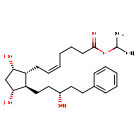
In continuation of my update on latanoprost 

Thumb
Aerie Pharmaceuticals, Inc. (NASDAQ:AERI) (Aerie or the Company), an ophthalmic pharmaceutical company focused on the discovery, development and commercialization of first-in-class therapies for the treatment of patients with open-angle glaucoma, retinal diseases and other diseases of the eye,   announced that the U.S. Food and Drug Administration (FDA) has approved Rocklatan (netarsudil and latanoprost ophthalmic solution) 0.02%/0.005% to reduce elevated intraocular pressure (IOP) in patients with open-angle glaucoma or ocular hypertension. 
Rocklatan is a once-daily eye drop that is a fixed-dose combination of latanoprost, the most widely-prescribed prostaglandin analog (PGA), and netarsudil, the active ingredient in Rhopressa (netarsudil ophthalmic solution) 0.02%, a first-in-class Rho kinase (ROCK) inhibitor specifically designed to target the trabecular meshwork (the eye’s principal drainage pathway). The diseased trabecular meshwork is considered to be the main cause of elevated IOP in open-angle glaucoma and ocular hypertension. Rhopressa® works by restoring outflow through the trabecular meshwork, while latanoprost increases fluid outflow through a secondary mechanism known as the uveoscleral pathway.
Aerie launched Rhopressa® in the United States in April 2018. The Company plans to launch Rocklatan™ in the United States in the second quarter of 2019.
“We are in the unique position of receiving FDA approval on a second glaucoma treatment less than a year from the U.S. launch of Rhopressa®,” said Vicente Anido, Jr., Ph.D., chairman and chief executive officer at Aerie. “Together, Rocklatan™ and Rhopressa® give us a broad therapeutic franchise, based on our ROCK inhibitor netarsudil, that addresses many of the needs of clinicians and patients in a wide variety of treatment settings. Our existing salesforce, which has been calling on U.S. eye-care professionals since last May, is very well positioned to introduce Rocklatan™ to these doctors and help them understand the clinical utility of both products in the care of their patients with glaucoma. We have also been working diligently on securing favorable reimbursement for our products, with Rhopressa® now enjoying broad commercial and Medicare Part D coverage, and Rocklatan™ already under review by major payers.”
The FDA approval of Rocklatan is based on data from two Phase 3 registration trials, MERCURY 1 and MERCURY 2. In these studies, Rocklatan™ achieved its primary 90-day efficacy endpoint as well as positive 12-month safety and efficacy results, demonstrating statistically superior IOP reduction over latanoprost and netarsudil at every measured time point. More than 60% of patients taking Rocklatan™ in the two MERCURY studies achieved an IOP reduction of 30% or more, a frequency that was nearly twice that achieved by participants taking latanoprost alone. Rocklatan™ also helped more patients get to low target pressures. Nearly twice as many patients taking Rocklatan™ reached 16 mmHg or lower and nearly three times as many reached 14 mmHg or lower compared to latanoprost.
In the two MERCURY studies, Rocklatan treatment was associated with generally mild and tolerable ocular adverse events, with minimal systemic side effects. The most common ocular adverse event in controlled clinical studies with Rocklatan™ was conjunctival hyperemia. Ninety percent of patients who experienced hyperemia reported it as mild and 5% discontinued because of it. Other common ocular adverse effects reported in the studies include instillation site pain, corneal verticillata and conjunctival hemorrhage.

About Rocklatan

Indications and Usage
Rocklatan (netarsudil and latanoprost ophthalmic solution) 0.02%/0.005% is indicated for the reduction of elevated intraocular pressure (IOP) in patients with open-angle glaucoma or ocular hypertension.
Select Important Safety Information
Although not observed in the two MERCURY studies, latanoprost has been reported to cause changes to pigmented tissues, including pigmentation of the iris, periorbital tissue (eyelid) and eyelashes. Iris pigmentation is likely to be permanent. Latanoprost has also been associated with gradual changes to eyelashes including increased length, thickness and number of lashes. These changes are usually reversible.
Ewf https://www.drugbank.ca/drugs/DB00654

https://www.biospace.com/article/fda-approves-aerie-pharma-s-glaucoma-combo-eye-drops/