Showing posts with label Priority Review. Show all posts

Tuesday, June 30, 2026

Praxis Precision Medicines Announces FDA Acceptance and Priority Review of New Drug Application for Relutrigine in Patients with SCN2A and SCN8A DEEs

Praxis Precision Medicines, Inc. (NASDAQ: PRAX), a fully integrated, leading central nervous system (CNS) precision neuroscience biopharmaceutical company, today announced that the U.S. Food and Drug Administration (FDA) has accepted for priority review its New Drug Application (NDA) for relutrigine, for the treatment of SCN2A and SCN8A developmental and epileptic encephalopathies (DEEs). The FDA has set a target action date under the Prescription Drug User Fee Act (PDUFA) of September 27, 2026.


  • FDA assigned PDUFA target action date of September 27, 2026

“Our first FDA acceptance of an NDA submission marks a significant milestone in our evolution to a commercial-stage company and an important step toward delivering innovative, precision neuroscience therapies to patients in need. SCN2A/8A DEEs have no currently approved targeted therapies and relutrigine, if approved, would be the first disease-modifying therapy for children suffering from these devastating and fatal conditions. We look forward to working closely with the FDA during the review process while continuing to advance our launch preparations,” said Marcio Souza, president and chief executive officer.

Relutrigine for treatment of SCN2A/8A DEEs
The NDA is supported by positive results from the EMBOLD study, which was stopped early for efficacy following a successful interim analysis and recommendation from the Data Monitoring Committee. Relutrigine has an Orphan Drug Designation, as well as a Rare Pediatric Disease Designation and a Breakthrough Therapy Designation. If granted approval, relutrigine will be the first FDA-approved therapy for SCN2A/8A DEE as well as be eligible for a Pediatric Review Voucher.

Relutrigine is also being investigated in broad DEEs through the EMERALD trial, which is expected to be completed by the end of 2026.

About Relutrigine
Relutrigine is a first-in-class small molecule in development for the treatment of developmental and epileptic encephalopathies (DEEs) as a preferential inhibitor of persistent sodium current, shown to be a key driver of seizure symptoms in severe DEEs. Relutrigine’s mechanism of precision sodium channel (NaV) modulation is consistent with superior selectivity for disease-state NaV channel hyperexcitability. In vivo studies of relutrigine have demonstrated dose-dependent inhibition of seizures up to complete control of seizure activity in SCN2A, SCN8A and other DEE mouse models. Relutrigine has been generally well-tolerated in three Phase 1 studies and has demonstrated biomarker changes indicative of NaV channel modulation. Data from cohort 1 of the Phase 2 EMBOLD study demonstrated a well-tolerated, robust, short- and long-term improvement in motor seizures in a heavily pre-treated population, alongside maintained seizure freedom in some patients with SCN2A- and SCN8A-DEE. Relutrigine has received Orphan Drug Designation (ODD) and Rare Pediatric Disease Designation from the FDA for the treatment of SCN2A-DEE, SCN8A-DEE and Dravet syndrome; as well as Breakthrough Therapy Designation (BTD), and ODD from the European Medicines Agency for the treatment of SCN2A-DEE and SCN8A-DEE.


Wednesday, August 7, 2024

Lykos Therapeutics Announces FDA Acceptance and Priority Review of New Drug Application for MDMA-Assisted Therapy for PTSD


Lykos Therapeutics (formerly MAPS Public Benefit Corporation) ("Lykos"), a company dedicated to transforming mental healthcare, announced that the U.S. Food and Drug Administration ("FDA") has accepted its new drug application ("NDA") for midomafetamine capsules ("MDMA") used in combination with psychological intervention, which includes psychotherapy (talk therapy) and other supportive services provided by a qualified healthcare provider for individuals with post-traumatic stress disorder ("PTSD"). The FDA has granted the application priority review and has assigned a Prescription Drug User Fee Act ("PDUFA") target action date of August 11, 2024. If approved, this would be the first MDMA-assisted therapy and psychedelic-assisted therapy.

"Securing priority review for our investigational MDMA-assisted therapy is a significant accomplishment and underscores the urgent unmet need for new innovation in the treatment of PTSD," said Amy Emerson, chief executive officer of Lykos Therapeutics. "We remain focused on working with the FDA through the review process and preparing for a controlled launch with an emphasis on quality should this potential treatment be approved."

The NDA submission included results from numerous studies including two randomized, double-blind, placebo-controlled Phase 3 studies (MAPP1 and MAPP2) evaluating the efficacy and safety of MDMA used in combination with psychological intervention versus placebo with therapy in participants diagnosed with severe or moderate to severe PTSD, respectively. Both MAPP1 and MAPP2 studies met their primary and secondary endpoints and were published in Nature Medicine. 1, 2 The primary endpoint for both studies was to assess changes in PTSD symptom severity as measured by the change from baseline in Clinician-Administered PTSD Scale for DSM-5 ("CAPS-5"). The key secondary endpoint of both studies was to assess improvement in functional impairment associated with PTSD as measured by the change from baseline in the Sheehan Disability Scale ("SDS"). No serious adverse events were reported in the MDMA group in either study.

The FDA grants priority review for drugs that, if approved, would represent significant improvements in the safety or effectiveness of the treatment, diagnosis, or prevention of serious conditions when compared to standard applications. 

MDMA-assisted therapy has not been approved by any regulatory agency. The safety and efficacy of MDMA-assisted therapy has not been established for the treatment of PTSD. Investigational MDMA-assisted therapy is also being studied in other indications.

About MDMA-Assisted Therapy
MDMA (3,4-methylenedioxymethamphetamine) is not new to mental health professionals. MDMA is an entactogen— a class of psychoactive compounds that are differentiated from classic psychedelics (i.e., psilocybin, mescaline and LSD) and are defined based on their mechanism and known effects of increasing self-awareness leading to introspection and personal reflection.27,,28 In the 1970's and early 1980's MDMA was used in conjunction with talk therapy by mental health providers to enhance patients' access, processing, and communication of difficult emotions and experiences.29 In 1985, the U.S. Drug Enforcement Administration ("DEA") made MDMA a Schedule I drug under the Controlled Substances Act preventing it from being used for recreational or medical use. 30 Since then, research has shown the unique properties of MDMA allow it to act as a powerful catalyst to support psychotherapy by helping diminish the brain's fear response allowing people to access and process painful memories without being overwhelmed. 31 However, additional clinical trials would be needed to secure regulatory review and potential approval.

Lykos, with longstanding roots in advocacy for psychedelic medicine, pioneered the first randomized, double-blind, placebo controlled clinical trials evaluating the efficacy and safety of MDMA-assisted therapy as an investigational modality using midomafetamine (MDMA) in combination with psychological intervention to treat PTSD.

With a growing body of evidence supporting the potential medical use of MDMA, in 2017 the FDA granted the company's investigational MDMA-assisted therapy Breakthrough Therapy designation, a process designed to expedite the development and review of drugs intended to treat serious conditions for which preliminary scientific evidence indicates that it may demonstrate a substantial improvement over available therapies. If approved by the FDA, the U.S. Drug Enforcement Administration ("DEA") would be required to reschedule MDMA making it available for prescription medical use.


Ref: https://en.wikipedia.org/wiki/MDMA


Lykos Therapeutics Announces FDA Acceptance and Priority Review of New Drug Application for MDMA-Assisted Therapy for PTSD

Wednesday, May 8, 2019

U.S. FDA Grants Priority Review for Fedratinib New Drug Application in Myelofibrosis

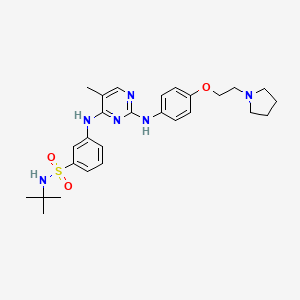
Celgene Corporation (NASDAQ:CELG)   announced the U.S. Food and Drug Administration (FDA) has accepted the company’s New Drug Application (NDA) for fedratinib and granted a Priority Review. Fedratinib is a highly selective JAK2 inhibitor intended for the treatment of patients with myelofibrosis, a serious bone marrow disorder that disrupts the body’s normal production of blood cells.1 Under the Prescription Drug User Fee Act, the FDA has set its action date as Sept. 3, 2019.
  Fedratinib.png
“The acceptance of the NDA and granting of Priority Review for fedratinib represent the first potential new treatment option after many years for patients affected by myelofibrosis.” said Jay Backstrom, M.D., Chief Medical Officer for Celgene. “Patients with myelofibrosis, including the number who are ineligible for or failed existing therapy continues to increase, representing a well-defined unmet medical need. We believe fedratinib can play an important role in the treatment of myelofibrosis and we look forward to working with the FDA as the review process advances.”
The NDA for fedratinib is based on results from a randomized, placebo-controlled, phase 3 trial (JAKARTA)in patients with primary or secondary myelofibrosis, as well as a single-arm, open-label phase 2 trial (JAKARTA2) in patients with primary or secondary myelofibrosis previously exposed to ruxolitinib, the only FDA-approved treatment for the disease. Results of these two trials have been previously published in peer-reviewed journals. The FDA has also provided fedratinib Orphan Drug designation for the treatment of secondary and primary myelofibrosis.
Celgene also plans to evaluate fedratinib in combination with luspatercept.
https://en.wikipedia.org/wiki/Fedratinib
https://pubchem.ncbi.nlm.nih.gov/compound/Tg-101348#section=Structures