Showing posts with label Complicated Urinary Tract Infections. Show all posts

Wednesday, January 28, 2026

FDA Approves Contepo (fosfomycin) for Injection for the Treatment of Complicated Urinary Tract Infections


The U.S. Food and Drug Administration (FDA) has approved Contepo (fosfomycin) for injection for the treatment of patients 18 years of age and older with complicated urinary tract infections (cUTI), including acute pyelonephritis, caused by susceptible isolates of Escherichia coli and Klebsiella pneumoniae.

Contepo is an epoxide antibacterial that works by disrupting bacterial cell wall synthesis through covalently binding and inhibiting phosphoenolpyruvate transferase (MurA), thereby blocking the synthesis of peptidoglycan. The drug is bactericidal against Enterobacterales.

Dosing and Administration
The recommended dosage of Contepo is 6 grams administered every 8 hours by intravenous infusion over 1 hour in patients 18 years of age or older with an estimated creatinine clearance greater than 50 mL/min. The duration of therapy is up to 14 days and should be guided by the severity of infection and the patient's clinical status. Dosage adjustments are required for patients with renal impairment.

Clinical Trial Results
The FDA approval was based on data from a multinational, double-blind clinical trial (Trial 1) that enrolled 464 adults hospitalized with cUTI, including acute pyelonephritis. The study compared Contepo 6 grams intravenously every 8 hours to piperacillin/tazobactam 4.5 grams intravenously every 8 hours for 7 days of therapy, with treatment allowed for up to 14 days in bacteremic patients.

In the microbiological modified intent-to-treat (mMITT) population of 339 patients, Contepo demonstrated efficacy with regard to overall response at the test-of-cure visit. Overall success, defined as clinical cure plus microbiological eradication, was achieved in 63.5% (108/170) of Contepo-treated patients compared to 55.6% (94/169) of piperacillin/tazobactam-treated patients.

Important Safety Information
The most common adverse reactions (incidence ≥2%) observed in clinical trials were transaminase elevations, hypokalemia, neutropenia, nausea, vomiting, diarrhea, hypocalcemia, hypernatremia, headache, and hypophosphatemia.

Contepo contains 1,980 mg of sodium in each vial. The high sodium load associated with its use may result in changes in serum electrolytes, such as increased levels of serum sodium and decreased levels of potassium, calcium, and phosphorus. A low-sodium diet is recommended during Contepo treatment, and healthcare providers should monitor serum electrolyte levels and fluid status during treatment.

Contepo has been shown to prolong the QT interval in some patients and should be avoided in patients with known QT prolongation or ventricular arrhythmias, including a history of torsade de pointes. Healthcare providers should monitor electrolytes during treatment with Contepo.

Contepo is contraindicated in patients with known serious hypersensitivity to fosfomycin or any of the excipients.

Tuesday, September 10, 2024

FDA Approves Exblifep (cefepime/enmetazobactam) for the Treatment of Complicated Urinary Tract Infections,


Allecra Therapeutics (“Allecra”), a biopharmaceutical company developing novel therapies to combat antibiotic resistance, announced today that the U.S. Food and Drug Administration (FDA) has approved Exblifep (cefepime/enmetazobactam), as a treatment for complicated urinary tract infections (cUTIs), including pyelonephritis, in patients 18 years and older. Allecra has also received a five-year marketing exclusivity extension from the FDA as part of the Generating Antibiotic Incentives Now Act (GAIN Act). The GAIN Act, enacted by the U.S. Congress, incentivizes the creation of new anti-infective therapeutics by providing benefits to manufacturers of Qualified Infectious Disease. Products (QIDPs).

"Receiving FDA approval is a tremendous achievement for Allecra and a testament to the hard work and dedication of a small, yet highly focused team of individuals. I extend my sincere congratulations to my colleagues Omar Lahlou and Patrick Velicitat for their leadership and oversight throughout this whole process,” said Iain Buchanan, Supervisory Board Member of Allecra Therapeutics. “As we continue our discussions with strategic partners for product launch in the U.S., we value the FDA’s positive decision on Exblifep’s ability to address a critical unmet medical need for patients.”

The FDA’s approval of Exblifep was supported by a totality of clinical data that demonstrated Exblifep effectiveness against antimicrobial resistance in gram-negative bacteria, especially resistance mediated by both ESBL (Extended Spectrum Beta Lactamases) and AmpC. This included results from Allecra’s Phase 3 ALLIUM trial, which met criteria for non-inferiority and superiority compared to piperacillin/tazobactam in the primary composite outcome of clinical cure and microbiological eradication in patients with cUTIs.

Allecra is the sole holder of a significant patent estate covering Exblifep in major territories with the GAIN Act extending Allecra’s market exclusivity until 2032. Enmetazobactam was first discovered by Orchid Pharma and all rights outside India were assigned to Allecra Therapeutics in 2013. The company has since taken the sole responsibility for the international clinical and regulatory development of Exblifep. Allecra was founded through a strategic partnership formed by Nicholas Benedict, Stuart Shapiro and Edward Currie in conjunction with Orchid Chemicals and Pharmaceuticals Ltd. and Allecra lead investors, Andera Partners, Forbion and EMBL Ventures. The company has concluded exclusive license agreements for Exblifep with Shanghai Haini Pharmaceutical in Greater China and ADVANZ PHARMA in Europe.

https://en.wikipedia.org/wiki/Cefepime/enmetazobactam
https://pubchem.ncbi.nlm.nih.gov/compound/Enmetazobactam#section=2D-Structure

FDA Approves Exblifep (cefepime/enmetazobactam) for the Treatment of Complicated Urinary Tract Infections

Thursday, December 30, 2021

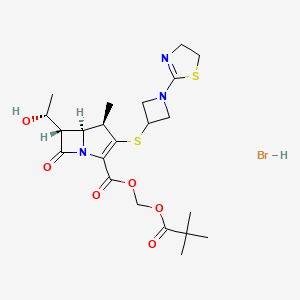
Spero Therapeutics Submits New Drug Application for Tebipenem HBr for the Treatment of Complicated Urinary Tract Infections including Pyelonephritis

Tebipenem pivoxil hydrobromide.png   

Spero Therapeutics, Inc. announced the submission of a new drug application (NDA) to the U.S. Food and Drug Administration (FDA), seeking approval for tebipenem HBr tablets for the treatment of complicated urinary tract infections (cUTI), including pyelonephritis, caused by susceptible microorganisms. If approved, tebipenem HBr would be the only oral carbapenem antibiotic available for use in cUTI.

“With the submission of this NDA, we have taken a major step towards potentially providing a substantial number of appropriate cUTI patients with an oral treatment option that could replace historical use of intravenous (IV) therapy,” said Ankit Mahadevia, M.D., Chief Executive Officer of Spero Therapeutics. “If approved, we believe tebipenem HBr could help patients significantly, and the avoidance of IV administration could lead to reduced healthcare resource utilization. We look forward to working with the FDA during the NDA review process as we prepare for tebipenem HBr’s anticipated launch in the second half of 2022.”

The NDA submission includes previously communicated positive data from the Phase 3 ADAPT-PO trial. This data showed that ADAPT-PO met its primary endpoint by demonstrating that oral tebipenem HBr was statistically non-inferior to IV ertapenem in the treatment of patients with cUTI and patients with acute pyelonephritis (AP).

More...

https://pubchem.ncbi.nlm.nih.gov/compound/Tebipenem-pivoxil-hydrobromide

Tuesday, March 3, 2020

FDA Approves Fetroja (cefiderocol) for the Treatment of Complicated Urinary Tract Infections

Cefiderocol.svg

The U.S. Food and Drug Administration approved Fetroja (cefiderocol), an antibacterial drug for treatment of patients 18 years of age or older with complicated urinary tract infections (cUTI), including kidney infections caused by susceptible Gram-negative microorganisms, who have limited or no alternative treatment options.

“Today’s approval provides an additional treatment option for patients with cUTIs who have limited or no alternative treatment options,” said John Farley, M.D., M.P.H., acting director of the Office of Infectious Diseases in the FDA’s Center for Drug Evaluation and Research. “A key global challenge the FDA faces as a public health agency is addressing the threat of antimicrobial-resistant infections, like cUTIs. This approval represents another step forward in the FDA’s overall efforts to ensure safe and effective antimicrobial drugs are available to patients for treating infections.”
The safety and effectiveness of Fetroja was demonstrated in a study of 448 patients with cUTIs. Of the patients who were administered Fetroja, 72.6% had resolution of symptoms and eradication of the bacteria approximately seven days after completing treatment, compared with 54.6% in patients who received an alternative antibiotic. The clinical response rates were similar between the two treatment groups.
Labeling for Fetroja includes a warning regarding the higher all-cause mortality rate observed in Fetroja-treated patients compared to those treated with other antibiotics in a trial in critically ill patients with multidrug-resistant Gram-negative bacterial infections. The cause of the increase in mortality has not been established. Some of the deaths were a result of worsening or complications of infection, or underlying co-morbidities. The higher all-cause mortality rate was observed in patients treated for hospital-acquired/ventilator-associated pneumonia (i.e.nosocomial pneumonia), bloodstream infections, or sepsis. The safety and efficacy of Fetroja has not been established for the treatment of these types of infections.
The most common adverse reactions observed in patients treated with Fetroja included diarrhea, constipation, nausea, vomiting, elevations in liver tests, rash, infusion site reactions, candidiasis (yeast infection), cough, headache and hypokalemia (low potassium). Fetroja should not be used in individuals with a known history of severe hypersensitivity to beta-lactam antibacterial drugs.
Fetroja received the FDA’s Qualified Infectious Disease Product (QIDP) designation. The QIDP designation is given to antibacterial and antifungal drug products intended to treat serious or life-threatening infections under the Generating Antibiotic Incentives Now (GAIN) title of the FDA Safety and Innovation Act. As part of QIDP designation, Fetroja was granted Priority Review under which the FDA’s goal is to take action on an application within an expedited time frame.
https://en.wikipedia.org/wiki/Cefiderocol