Monday, October 14, 2013

Active ingredient of ipecac syrup inhibits growth of cancer cells

An old home remedy called ipecac syrup, once stocked in medicine cabinets in case of accidental poisoning, is showing promise as a new chemotherapy drug for bladder cancer.

Years ago, ipecac syrup was used to induce vomiting in poisoning cases. Now a Loyola University Medical Center study has found that the active ingredient of ipecac syrup effectively inhibits the growth of bladder cancer cells, especially when combined with a standard chemotherapy drug.

In the new study, Loyola researchers exposed cell lines of normal and cancerous bladder cells to emetine alone and to emetine plus cisplatin. (Cisplatin is the standard chemotherapy drug for advanced bladder cancer.)

  • Emetine alone inhibits the proliferation of bladder cancer cell lines.
  • Emetine acts synergistically with cisplatin to inhibit bladder cancer proliferation better than either drug does alone.
  • Emetine has little effect on normal cells.
Bladder cancer is the fourth most common cancer in men and the 9th most common cancer in women. But even with aggressive surgery and chemotherapy, the five-year survival rate for patients with advanced Stage 4 bladder cancer is only 4 to 20 percent.

"There is an urgent need to develop new drug combinations," Dr. Gupta said. "Our study demonstrates that combining emetine with cisplatin is potentially beneficial, and merits further study in clinical trials."

Dr. Gupta is an assistant professor in the departments of Urology and Surgery and in the Oncology Research Institute of Loyola University Chicago Stritch School of Medicine. Dr. Foreman is an associate professor in the Department of Pathology and the Oncology Research Institute. Other authors are John Jesse III, a Stritch student, and Paul Kuo, MD, FACS, chair of Loyola's Department of Surgery and director of the Oncology Research Institute.


Friday, October 11, 2013

FDA Approves Brintellix to Treat Major Depressive Disorder

We know that, Vortioxetine (vor-tye-ox-e-teen, trade name Brintellix, previously known as Lu AA21004) is a novel atypical antidepressant made byLundbeck and Takeda. On September 30, 2013, it was approved approved by the U.S. FDA for the treatment of major depressive disorder (MDD) in adults.  Vortioxetine was also investigated as a treatment for generalized anxiety disorder (GAD).

Regulatory approval for the treatment of MDD for the European market has been filed in September 2012, for the United States in October 2012, and filing for Canada should follow. Filing for the Japanese market is expected in 2013.

The U.S. Food and Drug Administration recently approved Brintellix (vortioxetine) to treat adults with major depressive disorder.

Thursday, October 10, 2013

FDA Approves Duavee to Treat Hot Flashes and Prevent Osteoporosis


Bazedoxifene is a third generation selective estrogen receptor modulator (SERM), under development by Pfizer following the completion of their takeover of Wyeth Pharmaceuticals. Pfizer are seeking approval for bazedoxifene in the prevention and treatment ofpostmenopausal osteoporosis. Bazedoxfiene is the result of an exclusive research collaboration between Wyeth Pharmaceuticalsand Ligand Pharmaceuticals.

The U.S. Food and Drug Administration today approved Duavee (conjugated estrogens/bazedoxifene) for women who suffer from moderate-to-severe hot flashes (vasomotor symptoms) associated with menopause and to prevent osteoporosis after menopause....

Wednesday, October 9, 2013

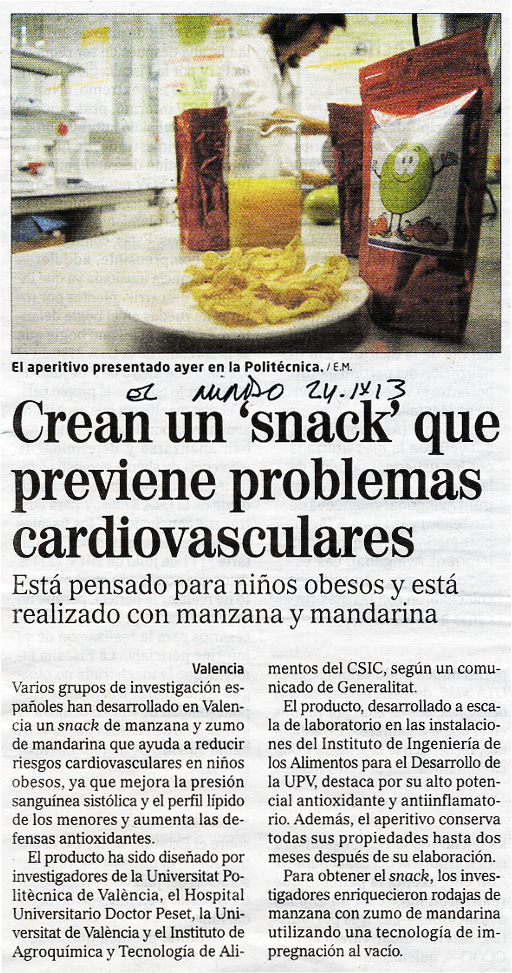
Apple impregnated with tangerine juice reduces risk of cardiovascular disease in obese children


"It is not a product that induces weight loss in children, but it would help improve their quality of life. The modification of oxidative stress in adipose tissue (or fat tissue) can help in the prevention of cardiovascular risk associated with childhood obesity and in the long term prevent diseases such as atherosclerosis (hardening and narrowing of the arteries caused by the accumulation of fat, cholesterol and other substances)," said Dr. Pilar Codoñer, head of the Department of Paediatrics, University Hospital Doctor Peset and professor in the Department of Paediatrics at the Universitat de València.

To obtain the snack, researchers enriched apple slices with mandarin juice using a technology of impregnation developed and patented by the UPV team that allows incorporating additional ingredients to the structure of porous foods, as in the case of fruits and vegetables.

"After several years of work the product is ready to be marketed by private companies. Our snack has all the properties of two products as healthy as apples and tangerine and has no added ingredient. It is an alternative to snacks that exist in the market that contain oils and saturated fats and therefore are high in calories," says Noelia Betoret, principal researcher and professor at the School of Agricultural Engineering and Natural Environment.

Monday, October 7, 2013

New class of antidepressants appears potentially effective in combating deadly form of lung cancer

Jahchan tested the effect of a tricyclic antidepressant called imipramine  (see structure)  on human small-cell lung cancer cells grown in the laboratory and growing as tumors in laboratory mice. She found that the drug was able to potently activate a self-destruction pathway in the cancer cells and to slow or block metastases in the animals. The drug maintained its effectiveness regardless of whether the cancer cells had previously been exposed, and become resistant, to traditional chemotherapy treatments. Another drug, an antihistamine called promethazine, identified by the bioinformatics screen, also exhibited cancer-cell-killing abilities.

Although imipramine did not affect cells from another main type of lung cancer called non-small-cell lung adenocarcinoma, it did inhibit the growth of cells from other neuroendocrine tumors, including pancreatic neuroendocrine cancers, an aggressive skin cancer called Merkel cell carcinoma, and a pediatric cancer called neuroblastoma. (Neuroendocrine cells receive signals from the nervous system and secrete hormoneslike adrenaline into the blood to affect the body's function.)

Further investigation showed that the drugs appear to work through a class of molecule on the cancer cells' surfaces called G-protein-coupled receptors, but the researchers are continuing to investigate exactly how the drugs specifically kill neuroendocrine cancer cells.
"Our collaboration with the Butte lab allowed us to move very quickly from the initial idea to very convincing results," Sage said. "It was less than 20 months from the time of our first discussion to a clinical trial because the bioinformatics approach had been established and the drugs are FDA-approved. By focusing on diseases with little hope for the patient, it's easier to go forward fast."

Ref : http://cancerdiscovery.aacrjournals.org/content/early/2013/09/16/2159-8290.CD-13-0183.abstract

Saturday, October 5, 2013

Addition of walnuts to diet can protect against diabetes and heart disease in at-risk individuals


The research found that daily intake of 56g of walnuts improves endothelial function in overweight adults with visceral adiposity. The addition of walnuts to the diet does not lead to weight gain. Further study on the topic is still suggested. "The primary outcome measure was the change in flow-mediated vasodilatation (FMD) of the brachial artery," wrote the research group. "Secondary measures included serum lipid panel, fasting glucose and insulin, Homeostasis Model Assessment-Insulin Resistance values, blood pressure, and anthropometric measures. FMD improved significantly from baseline when subjects consumed a walnut-enriched diet as compared with the control diet. Beneficial trends in systolic blood pressure reduction were seen, and maintenance of the baseline anthropometric values was also observed. Other measures were unaltered."


Friday, October 4, 2013

Apple impregnated with tangerine juice reduces risk of cardiovascular disease in obese children


"It is not a product that induces weight loss in children, but it would help improve their quality of life. The modification of oxidative stress in adipose tissue (or fat tissue) can help in the prevention of cardiovascular risk associated with childhood obesity and in the long term prevent diseases such as atherosclerosis (hardening and narrowing of the arteries caused by the accumulation of fat, cholesterol and other substances)," said Dr. Pilar Codoñer, head of the Department of Paediatrics, University Hospital Doctor Peset and professor in the Department of Paediatrics at the Universitat de València.

To obtain the snack, researchers enriched apple slices with mandarin juice using a technology of impregnation developed and patented by the UPV team that allows incorporating additional ingredients to the structure of porous foods, as in the case of fruits and vegetables.

"After several years of work the product is ready to be marketed by private companies. Our snack has all the properties of two products as healthy as apples and tangerine and has no added ingredient. It is an alternative to snacks that exist in the market that contain oils and saturated fats and therefore are high in calories," says Noelia Betoret, principal researcher and professor at the School of Agricultural Engineering and Natural Environment.

Wednesday, October 2, 2013

Phase III EINSTEIN trial program: XARELTO reduces risk of DVT and PE

In continuation of my update on Rivaroxaban


The EINSTEIN-PE study was an open-label, randomized, non-inferiority trial. The trial compared oral rivaroxaban – 15 mg twice daily for three weeks, followed by 20 mg once daily – with the current standard of care (enoxaparin followed by a Vitamin K Antagonist [VKA]) in subjects with acute symptomatic PE with or without symptomatic DVT. Patients received treatment for six or 12 months. EINSTEIN-PE enrolled 4,833 participants and is the largest study ever conducted in the acute treatment of PE. 


Friday, September 20, 2013

Cell death protein could offer new anti-inflammatory drug target

Scientists in Melbourne, Australia, have revealed the structure of a protein that is essential for triggering a form of programmed cell death called necroptosis, making possible the development of new drugs to treat chronic inflammatory diseases such as Crohn's disease and rheumatoid arthritis.


Thursday, September 19, 2013

Drug blocks light sensors in eye that may trigger migraine attacks

Panda and his collaborators turned to the Lundbeck library of diverse compounds. In hundreds of 384-well plates, a team led by Ken Jones at Lundbeck tested whether each chemical from the library turned off melanopsin by measuring the calcium levels after the plate was exposed to light. When melanopsin is functioning, calcium levels increase after light exposure indicating that light has been sensed and a signal is being generated. Several compounds from the chemical library stopped this calcium increase from happening, suggesting that they were blocking the function of melanopsin.

None of these compounds looked like retinoids, so it was an exciting breakthrough, Panda says. The chemicals, dubbed opsinamides (see structures a few), also 


showed no interaction with rhodopsin or other opsins. "We wanted to make sure they were specific to melanopsin," says Panda. To find out whether the opsinamides would have a physiological response in addition to binding to melanopsin in bench experiments, Megumi Hatori and Ludovic Mure from Panda's Salk lab group next looked at whether the drug affected the pupillary constriction in mice. Normally, in extremely bright light, the pupil of the eye shrinks to its smallest size. But when the mice were treated with one of the opsinamides, their pupils didn't shrink as usual. Most importantly, the drug had no detectable effect in mice lacking melanopsin, further showing its specificity for melanopsin. Finally, newborn mice treated with the compound no longer avoided bright lights. The results, Panda says, show that the drug is stopping melanopsin from signaling the brain when the eyes are exposed to bright light.

"So far, everything known about melanopsin has been discovered using knock-out mice that completely lack the receptor," says Panda. "So this offers a new way to study the protein." Kenneth Jones, the former project head at Lundbeck, notes that "the two compounds require further optimization in anticipation of clinical testing but are extraordinarily useful for research purposes and as leads in the discovery process." Co-author Jeffrey Sprouse has co-founded a start-up company, Cyanaptic, to do just that...


Wednesday, September 18, 2013

Investigational oral regimen for hepatitis C shows promise

In a study of an all-oral drug regimen, a majority of volunteers with liver damage due to hepatitis C virus (HCV) infection were cured following a six-month course of therapy that combined an experimental drug, sofosbuvir, with the licensed antiviral drug ribavirin. The results showed that the regimen was highly effective in clearing the virus and well tolerated in a group of patients who historically have had unfavorable prognoses.


Tuesday, September 17, 2013

Promising chronic pain drug developed

4a,9-dihydroxy-7a-(hydroxymethyl)-3-methyl-2,3,4,4a,5,6-hexahydro-1H-4,12-methanol benzofuro[3,2-e]isoquinoline-7(7aH)-one (UMB 425)

Spotlighted in a recent issue of ACS Chemical Neuroscience, the compound, known as UMB 425, is as strong as morphine, but displays diminished tolerance over time with no obvious toxic effects.

"UMB 425 is a breakthrough in the development of therapeutics to treat chronic pain," says Coop. "Unlike other drugs developed to act on only one biological target, UMB 425 acts on two different opioid receptors in the body. When activated at the same time, these receptors work together to provide pain relief and slow the body's development of tolerance to the drug. This diminished tolerance allows a lower dose of the opioid to be administered for a longer time period, while still achieving the same level of pain relief."

For individuals living with chronic pain, either as a result of injury or disease such as arthritis, opioids are the standard treatment. But as the dosage increases to offset the body's tolerance to their effects, opioids cause a number of adverse effects, including constipation, nausea, drowsiness, and dizziness. The unique dual-profile of UMB 425 -- made possible through Coop's collaborations with Alexander MacKerell, PhD, professor in PSC and director of the School's Computer Aided Drug Design Center, and Maureen Kane, PhD, assistant professor in PSC and co-director of the School's Mass Spectrometry Facility -- provides both pain relief as well as diminished tolerance in one drug.


"Historically, medicinal chemists have developed drugs aimed at only one biological target," says Coop. "However, two drugs administered together have the potential to metabolize differently in different individuals, as well as affect patients' adherence to both drugs. A single compound that is able to provide both pain relief and diminished tolerance has the advantage of a defined ratio that we can optimize to ensure patients receive the maximum pain relief, while experiencing minimum adverse effects."


Monday, September 16, 2013

Eating whole fruits linked to lower risk of Type 2 diabetes

Eating more whole fruits, particularly blueberries, grapes, and apples, was significantly associated with a lower risk of type 2 diabetes, according to a new study led by Harvard School of Public Health (HSPH) researchers. Greater consumption of fruit juices was associated with a higher risk of type 2 diabetes. The study is the first to look at the effects of individual fruits on diabetes risk.


Friday, September 13, 2013

Unexpected use of former cancer drug, Zebularine...

Researchers at Lund University have unexpectedly discovered that an old cancer drug can be used to prevent rejection of transplanted tissue. The researchers now have high hopes that their discovery could lead to new treatments for both transplant patients and patients with autoimmune diseases.

"Our group were studying the effects of the old tumour drug Zebularine, (see structure) developed in the USA in the 1960s, and by chance we discovered that it had completely unexpected effects on the immune system," says Leif Salford, Senior Professor of Neurosurgery.


"It turned out that Zebularine has the ability to subdue the reaction of the body's immune system. This could be important in situations where tissue or organs are transplanted. We also think it could be used to curb the body's attacks on its own tissue in autoimmune diseases, for instance type 1 diabetes or rheumatoid arthritis," says Dr Nittby.

In studies on animals, the researchers used rats that were made diabetic. The researchers transplanted the islets of Langerhans  cell groups in the pancreas producing insulin -- from healthy rats from another kind of rat into those with diabetes. The diabetic rats were divided into two groups; one group were treated with Zebularine and the other, the control group, did not receive any treatment. The diabetic rats that were treated with Zebularine survived for a significantly longer period than the untreated rats.

"It is very interesting that we only treated them with Zebularine for two weeks, but the effects of the treatment could be observed throughout the 90-day follow-up period.

"The findings are very exciting and are a sign that the immune system was not just generally suppressed, but that the treatment was more targeted. Neither did we see any signs of side-effects," said Dr Nittby.


The researchers are now working intensively to further refine the treatment. The next step is to teach certain cells in the immune system -- the dendritic cells -- to accept certain specific proteins using the Zebularine treatment. This would mean that the treatment could be targeted even more.

Thursday, September 12, 2013

Drug reduces hospitalizations and cost of treating young children with sickle cell anemia

The study is the largest ever focusing on the economic impact of the drug hydroxyurea (see structure below)
 in children with the inherited blood disorder. The result supports expanded use of the drug to extend the length and quality of life for sickle cell anemia patients of all ages, said Winfred Wang, M.D., a member of the St. Jude Department of Hematology and principal investigator of the multicenter federally funded trial known as BABY HUG.

"We estimate that hydroxyurea cut overall annual medical expenses about $3,000 for each patient by helping patients avoid disease complications that require inpatient hospital care," said Wang, who is first and corresponding author of the Pediatrics study. "We expect those savings will grow along with patients, whose symptoms often increase in severity and frequency as they age."

About 100,000 individuals in the U.S. and millions worldwide have sickle cell disease, which leaves them at risk for premature death and disability. The disease is the most common genetic disorder affecting African-American individuals, but those from other ethnic and racial backgrounds also inherit mutations in the hemoglobin gene. The mutations result in blood cells that are prone to assuming the sickled shape that gives the disease its name and that leave patients at increased risk for episodes of acute pain, stroke, organ damage and other complications.

Tuesday, September 10, 2013

Scientists fish for new epilepsy model and reel in potential drug

According to new research on epilepsy, zebrafish have certainly earned their stripes. Results of a study in Nature Communications suggest that zebrafish carrying a specific mutation may help researchers discover treatments for Dravet syndrome (DS), a severe form of pediatric epilepsy that results in drug-resistant seizures and developmental delays.


Scientists fish for new epilepsy model and reel in potential drug

Monday, September 9, 2013

Synthetic polymer could stop the spread of HIV

The researchers created the large molecule with several sugar molecules, known as glycopolymers (Glycopolymer is synthetic polymer with pendant carbohydrates). By using different sugars attached to the macromolecule in solution, the scientists were able to investigate which sugar molecules were the most effective in inhibiting the potential binding of the virus.
They then measured how the designed macromolecules compete with the virus to bind to the dendritic cells of the immune system at different concentrations.
"These are preliminary but encouraging results for potentially preventing the spread of the HIV by sexual contact," said Dr Remzi Becer from Queen Mary's School of Engineering and Materials Science.
"We've shown that our synthetic molecule binds to the immune cell, which in turn blocks the virus from attaching and entering. The precisely designed macromolecules could be an ingredient of a condom cream or vaginal gel to act as a physical barrier from allowing the virus into the body."
Dr Becer added: "While this isn't a cure for HIV, it is a novel approach that could dramatically slow down the spread of HIV by sexual contact, and a model that could be replicated to treat other sexually transmitted diseases."


Saturday, September 7, 2013

Alzheimer's 'missing link' found: Promising target for new drugs

Yale School of Medicine researchers have discovered a protein that is the missing link in the complicated chain of events that lead to Alzheimer's disease, they report in the Sept. 4 issue of the journal NeuronResearchers also found that blocking the protein with an existing drug can restore memory in mice with brain damage that mimics the disease.


Thursday, September 5, 2013

FDA Advisory Committee Unanimously Recommends Approval Of Bayer's Riociguat In Two Pulmonary Hypertension Indications

We know that, Riociguat is (BAY 63-2521) is a novel drug that is in clinical development by Bayer. It is a stimulator ofsoluble guanylate cyclase (sGC). At the moment Phase III clinical trials investigate the use of riociguat as a new approach to treat two forms of pulmonary hypertension (PH): chronic thromboembolic pulmonary hypertension (CTEPH) and pulmonary arterial hypertension (PAH). Riociguat constitutes the first drug of a novel class of sGC stimulators.


Monday, September 2, 2013

Drug used for blood cancers may stop spread of breast cancer cells

In continuation of my update on Decitabine

A drug used to treat blood cancers may also stop the spread of invasive breast cancer, researchers at Mayo Clinic in Florida have discovered. Their study, published online in Breast Cancer Research, found that in the lab and in animals, the drug decitabine turns on a gene coding for protein kinase D1 (PRKD1) that halts the ability of cancer cells to separate from a tumor and spread to distant organs.


Friday, August 30, 2013

Study: Type 2 diabetic patients treated with DPP-4 linagliptin experience reductions in blood glucose levels

Data published in The Lancet showed that elderly people with Type 2 Diabetes (T2D) treated for 24 weeks with the dipeptidyl peptidase-4 (DPP-4) inhibitor linagliptin, marketed by Boehringer Ingelheim and Eli Lilly and Company, experienced significant reductions in blood glucose levels (HbA1c) compared with those receiving placebo. In addition, the overall safety and tolerability profile of linagliptin was similar to placebo, with no significant difference in hypoglycaemia.

Wednesday, August 28, 2013

Watermelon juice relieves post-exercise muscle soreness


Encarna Aguayo and colleagues cite past research on watermelon juice's antioxidant properties and its potential to increase muscle protein and enhance athletic performance. But scientists had yet to explore the effectiveness of watermelon juice drinks enriched in L-citrulline. Aguayo's team set out to fill that gap in knowledge.


They tested natural watermelon juice, watermelon juice enriched in L-citrulline (ABOVE STRUCTURE) and a control drink containing no L-citrulline on volunteers an hour before exercise. Both the natural juice and the enriched juice relieved muscle soreness in the volunteers. L-citrulline in the natural juice (unpasteurized), however, seemed to be more bioavailable -- in a form the body could better use, the study found.

Watermelon juice relieves post-exercise muscle soreness

Tuesday, August 27, 2013

Combined therapy could repair and prevent damage in Duchenne muscular dystrophy, study suggests

Results from a clinical trial of eteplirsen, {RNA, [P-deoxy-P-(dimethylamino)](2',3'-dideoxy-2',3'-imino-2',3'-seco)(2'a→5')(C-m5U-   C-C-A-A-C-A-m5U-C-A-A-G-G-A-A-G-A-m5U-G-G-C-A-m5U-m5U-m5U-C-m5U-A-G),    5'-[P-[4-[[2-[2-(2-hydroxyethoxy) ethoxy]ethoxy] carbonyl]-1-piperazinyl]-N,N-   dimethylphosphonamidate]}  a drug designed to treat Duchenne muscular dystrophy, suggest that the therapy allows participants to walk farther than people treated with placebo and dramatically increases production of a protein vital to muscle growth and health. The study, led by a team in The Research Institute at Nationwide Children's Hospital, is the first of its kind to show these results from an exon-skipping drug -- a class of therapeutics that allows cells to skip over missing parts of the gene and produce protein naturally....


Monday, August 26, 2013

New approach in the treatment of breast cancer

Scientists at the MedUni Vienna, in collaboration with a working group led by Nancy Hynes at the University of Basel, have discovered a new approach in the treatment of breast cancer: an international team involving the Clinical Institute of Pathology at the MedUni Vienna has been able to demonstrate the activation of a receptor, the Ret protein (Rearranged during transfection), on the surface of breast cancer cells. Increased levels of this protein are associated with a lower likelihood of survival for breast cancer patients.


Read more about RET Inhibitors at : http://www.cancercommons.org/tag/ret-inhibitors/

Sunday, August 25, 2013

GLENMARK-A new way for a new world « New Drug Approvals


Undiminished zest..


“Every year we expect two more molecules to get into clinical trials,” says Saldanha, his zest undiminished by past failures. “In 2008, in a span of one or two quarters, our entire pipeline pretty much got wiped out, but we never lost our commitment and passion.” At that time its most advanced molecule, oglemilast, used for treating patients with chronic obstructive pulmonary disease, had to be abandoned when its Phase IIb trials produced unsatisfactory results. It also had to suspend clinical development of GRC 6211, a compound for treating osteoarthritis pain, because of side effects.


Friday, August 23, 2013

New treatment for brittle bone disease found

We know that, Risedronic acid (see structure) (INN) or risedronate sodium (USAN) is a bisphosphonate used to strengthen bone, treat or prevent osteoporosis, and treat Paget's disease of bone. It is produced and marketed by Warner ChilcottSanofi-Aventis, and in Japan by Takeda under the trade names ActonelAtelvia, and Benet. It is also available in a preparation that includes a calcium carbonate supplement, asActonel with Calcium.

Osteogenesis imperfecta (OI and sometimes known as brittle bone disease, or "Lobstein syndrome") is a congenital bone disorder. People with OI are born with defective connective tissue, or without the ability to make it, usually because of a deficiency ofType-I collagen. This deficiency arises from an amino acid substitution of glycine to bulkier amino acids in the collagen triple helixstructure. The larger amino acid side-chains create steric hindrance that creates a bulge in the collagen complex, which in turn influences both the molecular nanomechanics as well as the interaction between molecules, which are both compromised.[3] As a result, the body may respond by hydrolyzing the improper collagen structure. If the body does not destroy the improper collagen, the relationship between the collagen fibrils and hydroxyapatite crystals to form bone is altered, causing brittleness.[4] Another suggested disease mechanism is that the stress state within collagen fibrils is altered at the locations of mutations, where locally larger shear forces lead to rapid failure of fibrils even at moderate loads as the homogeneous stress state found in healthy collagen fibrils is lost.[3]These recent works suggest that OI must be understood as a multi-scale phenomenon, which involves mechanisms at the genetic, nano-, micro- and macro-level of tissues.